
In this week’s Our Take: Fleeing to a monastery is sounding that much more enticing. Volleyball and SKIMs are serving up some solid brand storytelling. A nameless beauty brand is leveraging mystery for the viral treatment and smart design is putting a bank on the map.
Mystery, marketing and moisturiser?
Say less.

The Beauty Brand Playing TikTok Like a Crime Scene.
Some beauty launches with a shout. This one whispers and lets the internet do the yelling.
An as-yet-unnamed beauty brand is pulling a sleek stealth move: slipping unbranded, clinical-looking bottles into creators’ hands, each package laced with just enough clues to trigger the collective detective brain of TikTok.
The kind of stunt where content isn’t manufactured, it’s inevitable. Creators film their unboxings. The comments section turns into a digital corkboard of theories. Stitch chains form. Screenshots get passed around like evidence bags.
No paid campaign could buy this kind of intrigue. The brand isn’t selling a product, yet it’s selling a mystery. And the payoff? When the name drops, there’ll already be an audience invested, emotionally and algorithmically, in the reveal.
This is the rare launch playing the long game. It’s proof that in 2025, hype isn’t about volume, it’s about involvement. Give the people just enough to speculate, and they’ll do the rest for you.
Somewhere in a marketing war room, a social strategist is grinning. And somewhere on TikTok, a creator is holding up an anonymous white bottle, saying, “Okay guys, hear me out…”
They Didn’t Steal the Logos…Just Borrowed a Corner
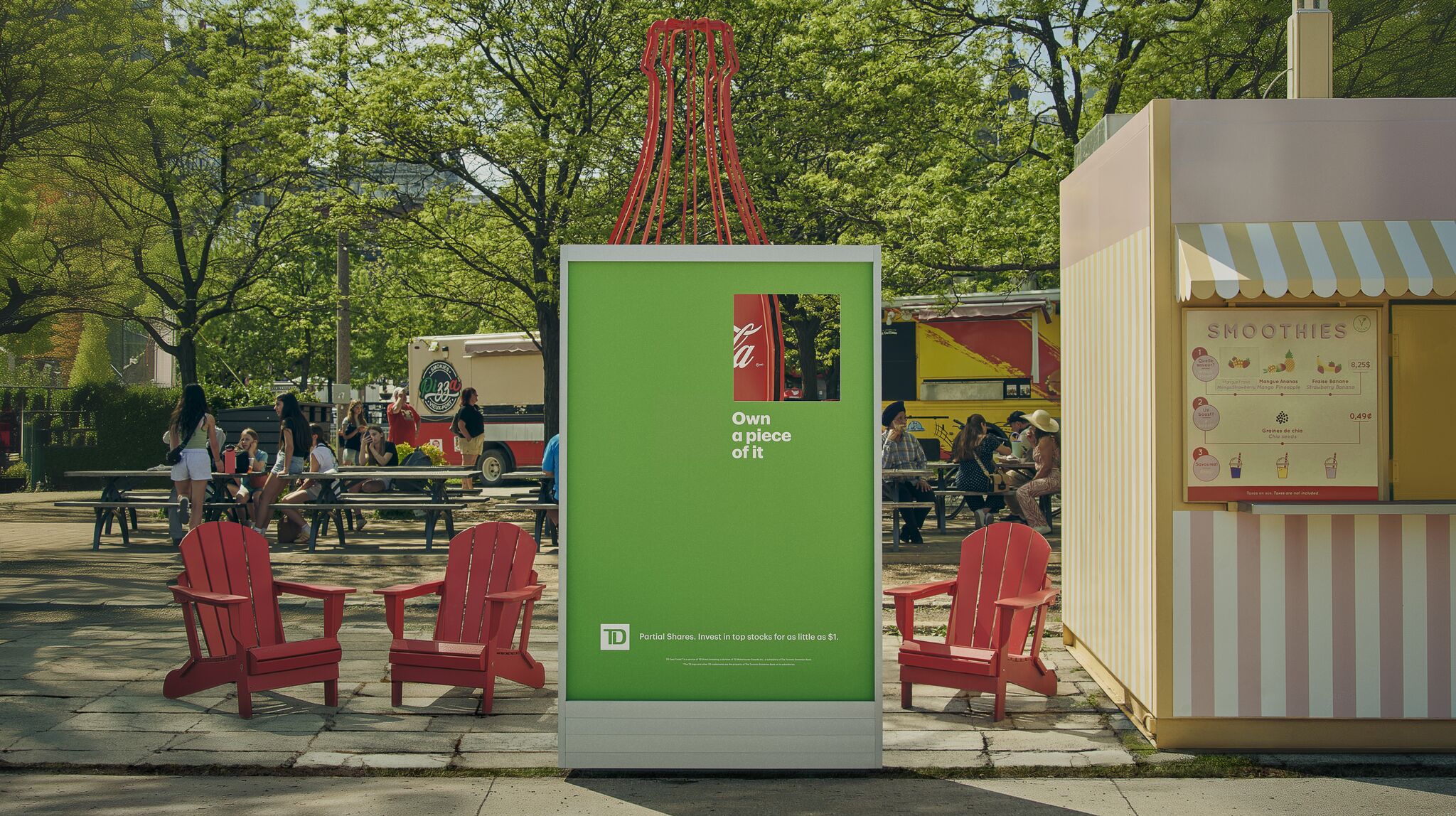
Using another brand’s logo in advertising is typically off-limits without permission. But TD Bank, with Ogilvy Canada, has found a clever workaround in its new “Own A Piece of It” campaign, referencing some of the world’s most recognisable logos without ever actually showing them.
Each billboard features a simple green background with a square cut-out in the center. These are placed in real-world locations so that the cut-out frames part of a nearby brand sign, such as the golden arches of McDonald’s, a glimpse of the Apple logo, or the edge of the Starbucks siren. There’s no Photoshop, just smart placement and visual inference.
The execution ties directly to TD’s message: with fractional investing, you don’t need to own a whole share to be part of something big. Likewise, you don’t need to see the full logo to know exactly which brand you’re looking at. The billboards themselves embody the concept that owning (or seeing) just a piece can still be powerful. It’s a visually simple but conceptually sharp campaign turning legal limitations into creative opportunities.
Hot Nun Summer

Forget Ibiza. Forget Glastonbury. This summer’s real escape has no set list, no cocktails, and zero Wi-Fi. The hot destination? A monastery.
Gen Z, digital natives turned digital burnouts, are quietly checking out of the endless scroll and into the cloister. Monasteries from Upstate New York to the Scottish Highlands are reporting they’re fully booked, not with pilgrims, but with overworked creatives, frazzled founders, and brunch-fatigued urbanites craving something they can’t DoorDash: silence.
It’s not about conversion. It’s about disconnection, or maybe reconnection. No phones buzzing at 3am. No “urgent” Slack pings. Just the metronome of bells marking the day, meals eaten without Instagram, and the gentle shock of hearing your own thoughts again.
This is the anti-holiday holiday: swapping Aperol for herbal tea, sunrise yoga for actual sunrise, and ‘networking’ for tending the garden with a stranger whose name you might never learn.
In a world where wellness has been commodified into luxury gyms, supplement stacks, and retreats that cost more than your rent, monasteries are offering something money can’t buy: a complete absence of the algorithm.
Maybe that’s why the idea feels quietly subversive. In a culture obsessed with more, more content, more productivity, more self-optimisation, monastic life offers less. And right now, less is starting to feel like the ultimate luxury.
Silence is the new status symbol. And the only FOMO you’ll feel? Is when you have to leave.
SKIMS Serves First: Riding the Volleyball Wave Ahead of LA 2028

Some brands chase trends. SKIMS reads the play, gets there early, and waits for the perfect set.
With volleyball now ranked as the most popular team sport for girls in the U.S., and the LA 2028 Olympics looming like a golden opportunity, SKIMS has planted itself firmly courtside, before the cultural moment spikes. This isn’t just a sports tie-in; it’s a strategic bet on where youth culture, female empowerment, and athletic visibility are headed next.
Volleyball has quietly built a fanbase that’s young, diverse, and fiercely engaged. TikTok is full of “volleyball girl” edits, the fashion world has started flirting with volleyballcore, and schools are seeing record participation.
SKIMS’ move here mirrors its playbook with other cultural flashpoints: identify an underserved but high-potential audience, then show up as if they were always part of the brand’s story. By backing professional women’s volleyball and spotlighting the next generation of female athletes, SKIMS isn’t just selling bodywear, it’s selling belonging, confidence, and ambition wrapped in sport.
The genius is in the timing. By the time the LA Olympics arrive, volleyball will be everywhere, and SKIMS will already be part of its origin story in mainstream culture.
That’s how you win: not by chasing the ball, but by being exactly where it’s going to land.