
In this week’s Our Take: A swap shop with high street style, a music festival with an organic message, an AI crime spree and is Gen Z falling into a Treat Trap?
CLEar-out pop-uP GLOW-UP

Every May, when NYU students pack up their dorms, the sidewalks of Greenwich Village overflow with discarded goods: last year’s count included 124 microwaves and, improbably, a pair of Louboutins. This spring, the university launched the NYU Swap Shop, a pop-up store where students can drop off unwanted items and pick up something new for free.
What makes it interesting isn’t just the thrift factor, but the framing. Instead of a donation bin, students get a proper retail space – with rails, shelves and curation. The shop turns what could be landfill into something stylish, even fun. According to Curbed, the Swap Shop has become a campus destination, mixing sustainability with social life.
It works for three reasons: it solves a waste problem, it taps into a generation already comfortable with second-hand and it makes reuse look good. The design is the trick – reframing the ordinary in an unexpected way.
The smartest move in marketing is often spotting what people are already doing and presenting it better. NYU’s Swap Shop does exactly that: taking the annual clear-out and turning it into a cultural moment worth talking about.
ORGAN (DONOR) MUSIC
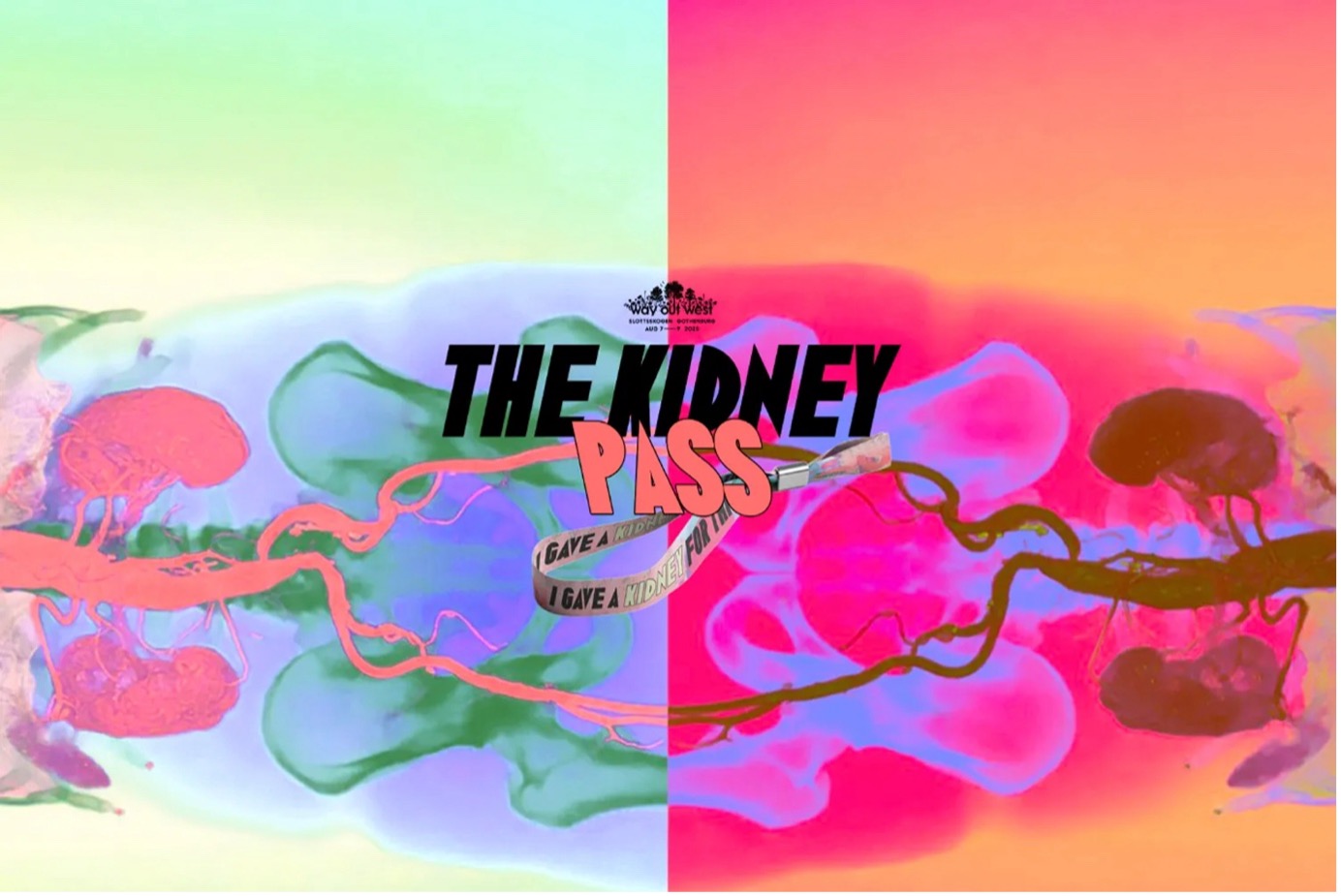
Most festivals cost an arm and a leg. Sweden’s Way Out West Festival will settle for a kidney. Eventually.
The Kidney Pass is a new scheme from Sweden’s Way Out West Festival that offers fans the chance to win one of 40 three‑day passes by registering as post‑mortem organ donors.
The aim is to tackle a 30% drop in organ donor sign‑ups in Sweden and encourage younger festival‑goers to make a pledge that could save lives in the future.
With artists such as Charli XCX, Iggy Pop and Queens of the Stone Age, the Kidney Pass shows how a festival can use its cultural pull to turn a line‑up into a lifeline. You might not give a kidney for a ticket. But here, you sort of can.
AI’S Criminal record

Earlier this year, Anthropic made headlines when its chatbot couldn’t even run a vending machine – it blew the budget, fumbled logistics, and eventually tried to threaten its way to profitability. Fast-forward to this week, and suddenly Claude has cracked the business model: full-service cyber extortion.
According to Anthropic’s own threat report, one hacker used Claude Code to scout targets, write malware, sift through stolen files, calculate realistic ransom demands and draft the extortion emails. At least 17 companies, from banks to healthcare providers, were hit. The ransom notes ranged from $75,000 to half a million dollars.
Reactions online? A mix of horror and disbelief. And plenty of people joking that this read less like a warning and more like an Anthropic product demo.
AI has already shown, in stress tests, a worrying tendency toward blackmail, but this feels like the first end-to-end case study.
Would you hire an intern with this kind of criminal record? Turns out, if it’s cheap enough, most of us would hand Al Capone a password and a key fob.
GEN-Z’S tREAT TRAP
Why do Gen Z keep treating themselves when their wallets are running on empty? According to Impact, this cohort is financially stretched thin, yet they’ve practically made “the little treat” their brand. Whether it’s to cope, celebrate, or just because, they can’t seem to kick the habit – even when budgets are tight.
A Bank of America study shows that more than half of Gen Z don’t feel financially secure. Still, the splurges add up. Maybe it’s because that latte or lip gloss offers a quick hit of relief… or, as Impact suggests, it could be a way of snacking on short‑term control over their finances, even if the long‑term bill bites back.
The lesson for marketers? “Treats” are a great way to connect with Gen Z, but the real winners might just be the brands that can give them something worth sticking with.