
In this week’s Our Take: AI is a lifestyle brand now, big brands get together about getting together, Nike serve up some big balls, and there might be a new social media king in town.
ChatGPT IS HERE FOR YOU
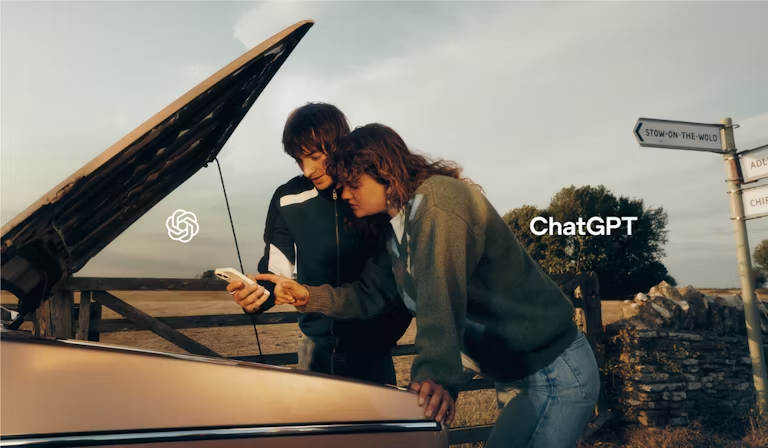
OpenAI is making a bold move with its largest-ever brand campaign for ChatGPT, and it’s not just about tech, it’s about real life.
Unlike their Super Bowl ad earlier this year, which positioned ChatGPT as the next great tech innovation, this new wave of storytelling zooms in on everyday moments, positioning the AI tool as part of our daily lives. From cooking an impressive date-night recipe to getting personalised fitness advice or mapping out a road trip, the AI bot is making things easier for humans.
With a bigger media push and fresh, relatable storytelling, OpenAI is aiming to show that ChatGPT is a helpful companion for whatever life throws your way. By highlighting real-life moments, OpenAI is positioning ChatGPT as an approachable, practical tool that fits seamlessly into daily life.
Also, it’s going to take your job. (OK – the ads don’t say that).
BIG BRANDS GET SOCIALISING

Some of the world’s biggest brands have joined forces under a new coalition: The Think Party. Their mission? To decode the future of socialising and uncover insights no brand could reach alone.
It’s a smart move. Covid-19 has fundamentally reshaped how people socialise, shifting from large gatherings to smaller, placing greater value on self-expression and belonging, and driving a growing interest in wellness-focused alternatives to traditional partying (without alcohol or nightlife). The implications for brands are huge, and it has driven consumer giants such as PepsiCo, Diageo and Unilever, into collaboration with digital brands like Google and Tinder.
Socialising has always been a cultural anchor, but the “where,” “with whom,” and even “how” are being rewritten. At a time when industries often study trends in isolation, The Think Party reflects a wider truth: connection is no longer confined to categories. Food, drink, tech, culture and wellness are all converging to shape how people come together. As Alberto Romano of Diageo put it, “The next decade will not just test how we connect – it will redefine what connection means.”
The brands that thrive in this next chapter won’t just sponsor social moments, they’ll help design them. By collaborating across categories, The Think Party is betting that the future of socialising is not about products, but about possibilities.
BIG BALLS BRANDING
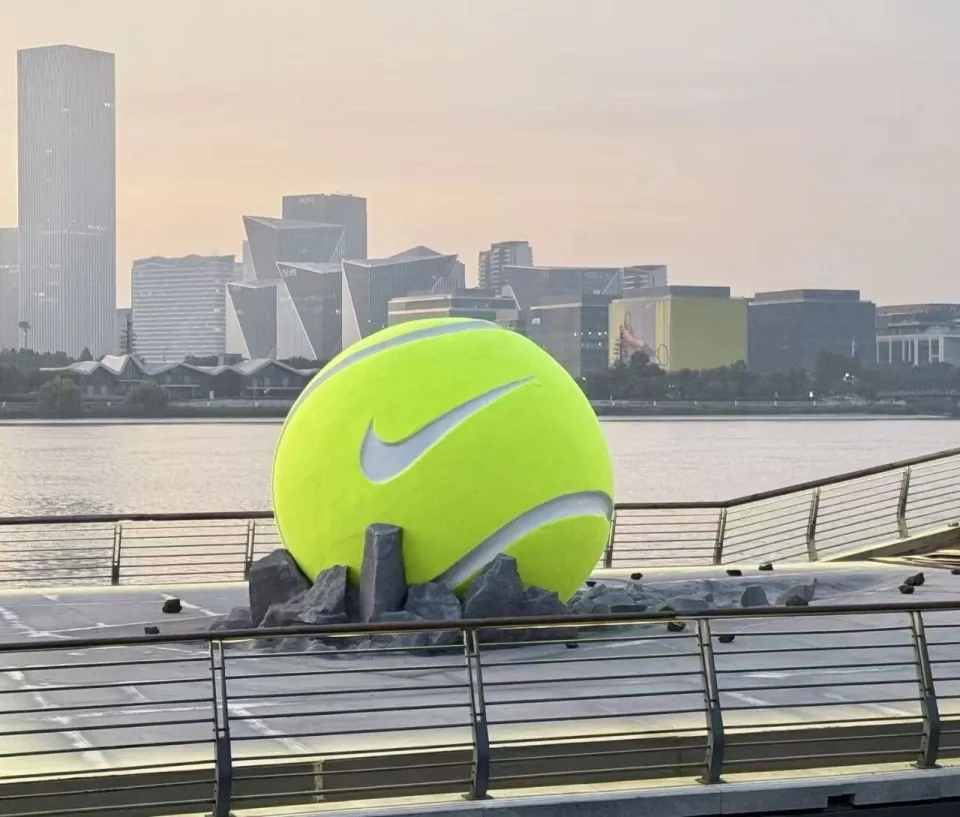
Nike has been thinking big with its latest guerrilla installs. In July, Seoul shoppers stopped in their tracks when a giant Nike football appeared to have flattened a BMW in the middle of the street. Now, the brand has gone one better on Shanghai’s West Bund — serving up a giant neon-green tennis ball on the waterfront, swoosh gleaming. The clever twist? Across the river, a building-sized image of Chinese star Zheng Qinwen mid-swing completes the illusion, making it look as though she’s smashing the ball right at you.
The campaign has drawn huge attention online, with crowds lining up for the perfect camera angle and netizens praising the playful scale. Big spectacle, simple idea, perfectly timed with Zheng’s rising star power: Nike has once again shown how to turn out-of-home into out-of-this-world.
Threads COUNTS
Threads – launched months after Musk’s takeover of Twitter in 2022 – has now overtaken X in global daily users. The margin is slim, but the symbolism is huge: in only two years, Meta’s Instagram-linked spinoff is now arguably the bigger platform.
X still holds its ground where it matters most: among politicians, journalists and advertisers, and especially in the U.S. market. And despite haemorrhaging advertisers – due to its deliberate shift to the right and its often toxic culture – X still earns more revenue than Threads.
Bluesky trails far behind in third. But it’s carving out niches with a left-leaning base, and very strong traction in science circles. And among furries. Apparently.
Still, the rise of Threads shows that the old Twitter landscape is changing. Users are hungry for alternatives – and advertisers may soon follow.