
In this week’s Our Take, blinged-up baby reveals take over the feed, Denmark’s burnable-licence stunt calls out drug-driving, an archbishop turns a cathedral into a rave, and brain science shifts our life stages.
The Blingiest Baby Reveal
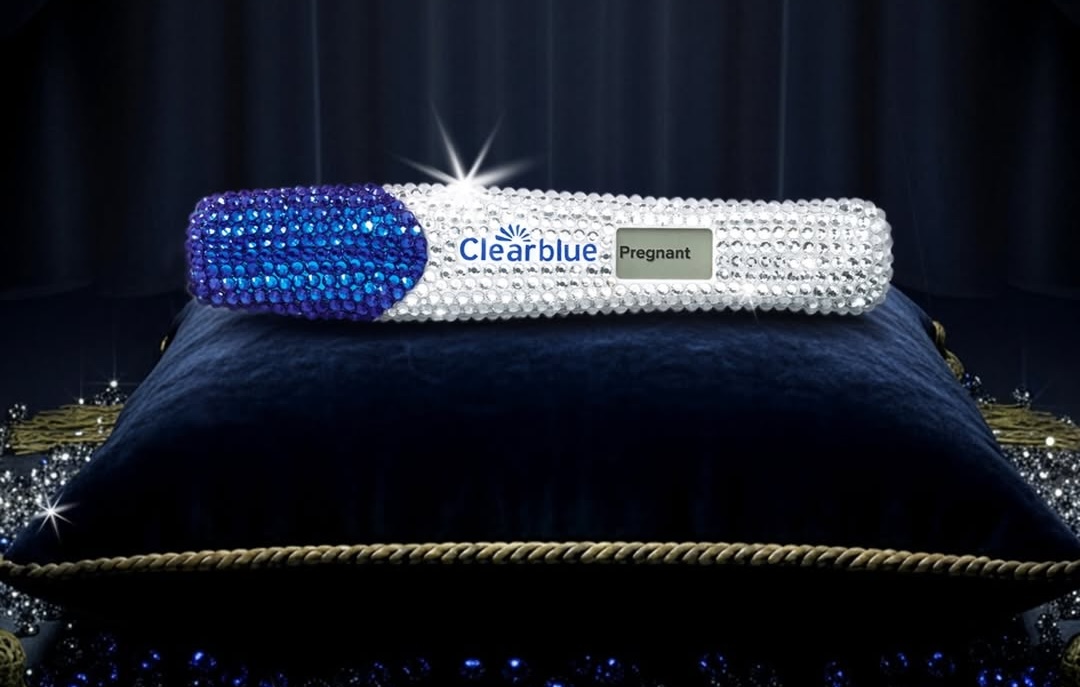
Clearblue has entered its sparkle era. The brand just released a rhinestone-encrusted version of its iconic pregnancy stick as a keepsake permanently frozen on “Pregnant.” Think of it as the sentimental, shelf-friendly version of that life-changing bathroom moment.
Pregnancy tests were never designed to be Instagrammable, yet they’ve become one of the most photographed objects of modern life. Clearblue, tapping into the rise of gender-reveal aesthetics, curated announcement posts, and the booming market for “first trimester gifting.” So instead of pretending the test ends when the result does, they’re leaning into the emotional crescendo.
Merch for a milestone moment, a prop for reveal videos, a cute addition to gift boxes, this is the kind of thing you’d find years later in a baby book and immediately tear up over.
Clearblue is tapping into a wider trend where brands are reframing functional moments into aesthetic rituals. People want souvenirs from their biggest chapters – engagements, proposals, births – and now, the “I found out” moment gets the same treatment.
When Your Licence Becomes a Rizla
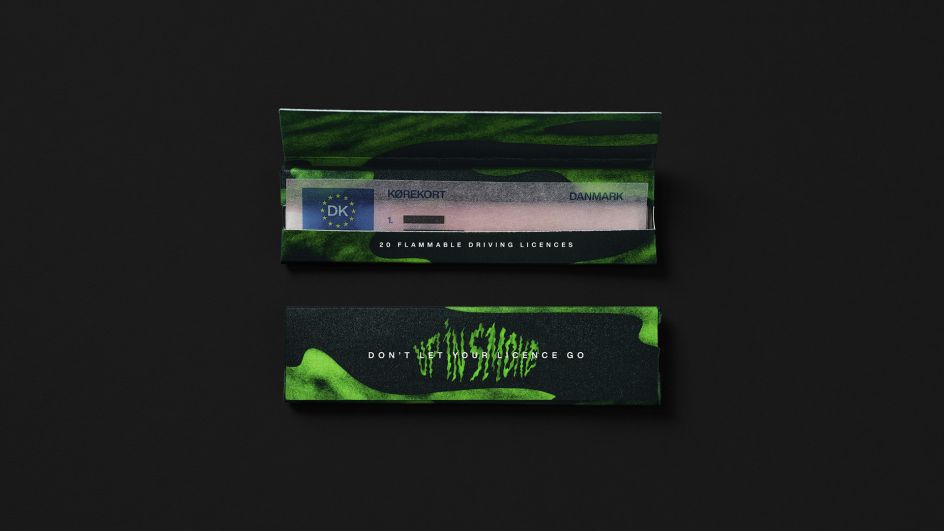
The Danish Road Safety Council has gone full savage mode with ‘Up in Smoke’, an anti–drug driving campaign created with indie shop Worth Your While – and it doesn’t lecture, it detonates. Instead of the usual doom-and-gloom PSA, they printed actual rolling papers that double as a Danish driver’s licence. One spark and your “freedom” goes up in smoke. A metaphor so literal it’s almost troll-level genius.
Why so blunt? Because the stats are ugly: one-third of Denmark’s serious or fatal drug-related crashes involve 17–24-year-olds. So the campaign meets the demographic where they live – in memes, irreverence and visuals that feel more Adult Swim than government body.
Two animated shorts anchor the story. Both are pulled from real-life beats:
• a kid who nicks his dad’s keys after lighting up and blows through a red light
• a group who hotbox themselves into oblivion, then manage to stall the car within 100 metres.
In both cases, the punchline is the same: that precious licence burns away – symbolically, but also physically – taking trust, independence and mobility with it.
This is the new wave of public safety comms: no fearmongering, no moralising, just a culture-coded gut punch that forces a double take. The rolling-paper licence is a perfect Gen Z mechanic – tactile, a bit cheeky, and engineered to travel on TikTok. It taps into a broader trend of governments borrowing from indie-brand aesthetics to cut through a numb, desensitised feed.
Drug driving isn’t new, but the way you tell young people to stop doing it needs to be. Denmark just proved that a playful visual, delivered with brutal clarity, can land harder than any grim reaper spot ever did.
Rave Us, O Lord!

Every so often the algorithm serves up a clip so surreal you wonder if someone accidentally fed Midjourney holy water. This week’s cultural hallucination? A priest-led rave outside a 14th-century cathedral, complete with lasers, beat drops, and a papal blessing looping like a vocal sample.
For Archbishop Bernard Bober’s 75th, the Archdiocese of Košice flew in Padre Guilherme – the now-famous “DJ priest” – to transform St. Elizabeth Cathedral into a cross between a liturgy and a Boiler Room session. And because 2025 loves a plot twist, Pope Leo XIV appeared via prerecorded message… which Guilherme immediately chopped and sampled into a techno track. Medieval spires, neon strobes, and a pontiff on the big screen? This is religion reimagined for the FYP.
The memes wrote themselves, but the moment hints at a deeper shift. The Catholic Church isn’t just dabbling in youth outreach – it’s actively hijacking youth culture’s formats. Gen Z doesn’t turn up for institutions, but they do turn up for chaos, camp, and the unexpected. A priest mixing a house beat after an “Amen”? That’s not irreverence – that’s strategy.
Traditionalists called it disrespectful. But here’s the uncomfortable truth: if institutions want relevance, they can’t simply talk to culture; they have to play in it. Even if that means swapping hymns for hardstyle.
Love it, hate it, or call it divinely deranged – one thing is clear: worship and nightlife are now running on the same BPM, and pop culture can’t look away.
Entering a new Brain Era
A major Cambridge study using 4,000 MRI scans has mapped how the brain rewires itself from birth to old age – and the pattern is far more dramatic than anyone expected. Instead of a steady journey from childhood to decline, the brain shifts through five defined phases, each marked by clear neurological turning points. The biggest reframe: “adolescence” doesn’t end when we turn 18 or even 25. Neurologically, it runs from age nine to 32, meaning the brain stays in its most intense period of pruning, optimisation and vulnerability well into the early-thirties era.
The phases, simplified:
0–9: Childhood – Rapid growth and messy wiring. The brain explores widely without much efficiency.
9–32: Adolescence – A sudden pivot into streamlining. Connections are strengthened or cut, cognitive performance peaks, and mental health risk is at its highest.
32–66: Adulthood – Stability. Personality and intelligence plateau and changes slow down, but efficiency gradually dips.
66–83: Early ageing – Networks begin separating into tighter sub-groups instead of working as one unified system. Age-related conditions start to surface.
83+: Late ageing – A continued shift toward fragmentation in the brain’s communication patterns. These ages aligned surprisingly closely with major life experiences – puberty, early-thirties transformation cycles, and the onset of later-life health issues – suggesting our culture may have sensed these transitions long before the data confirmed them.
OUR TAKE
This research lands at a moment when society is already renegotiating what adulthood looks like. The idea that the brain is still in its adolescent phase until 32 makes sense of the career experimentation, identity churn and mental-health turbulence that define that decade. And on the other end of the timeline, the finding that the brain continues reorganising itself into our 80s supports a growing cultural shift toward pro-ageing and lifelong neuroplasticity. We’re not fixed at 25 or fading at 65 – we’re continually rewiring. The science essentially confirms what culture has been articulating: human development stretches far longer, and far stranger, than the old milestones ever suggested.