
In this week’s Our Take: consumer info for your feed, Bob the Builder upskills, celebs get mentored by old masters, and a bilingual brand with brilliant balance.
KNOW WHAT’S IN YOUR SCROLL
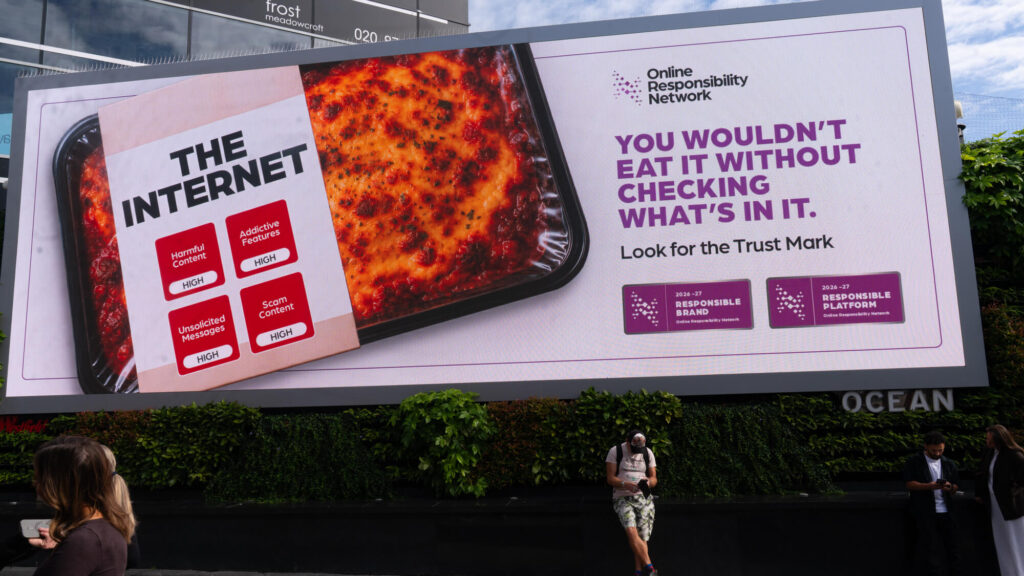
We’ve spent years being told to check what’s in our food. Turns out, our feeds could do with a safety label too.
For Online Responsibility Day, the Online Responsibility Network has packaged up the internet like a supermarket ready meal, complete with warnings for harmful content, addictive features, unsolicited messages and scams. Suddenly, doomscrolling looks a lot less appetising.
It’s a smart visual trick. Online harms can feel vague, technical and easy to scroll past. Slap them on a food label and everyone understands the language immediately: maybe don’t consume too much of this.
The campaign also introduces a Trust Mark for platforms taking online safety seriously, giving us something closer to a nutritional rating for our digital diet.
We already check calories, ingredients and use-by dates before deciding what to put into our bodies, but maybe we should be equally picky about what we put into our heads.
CAN WE FIX IT? NO, NOT YET!
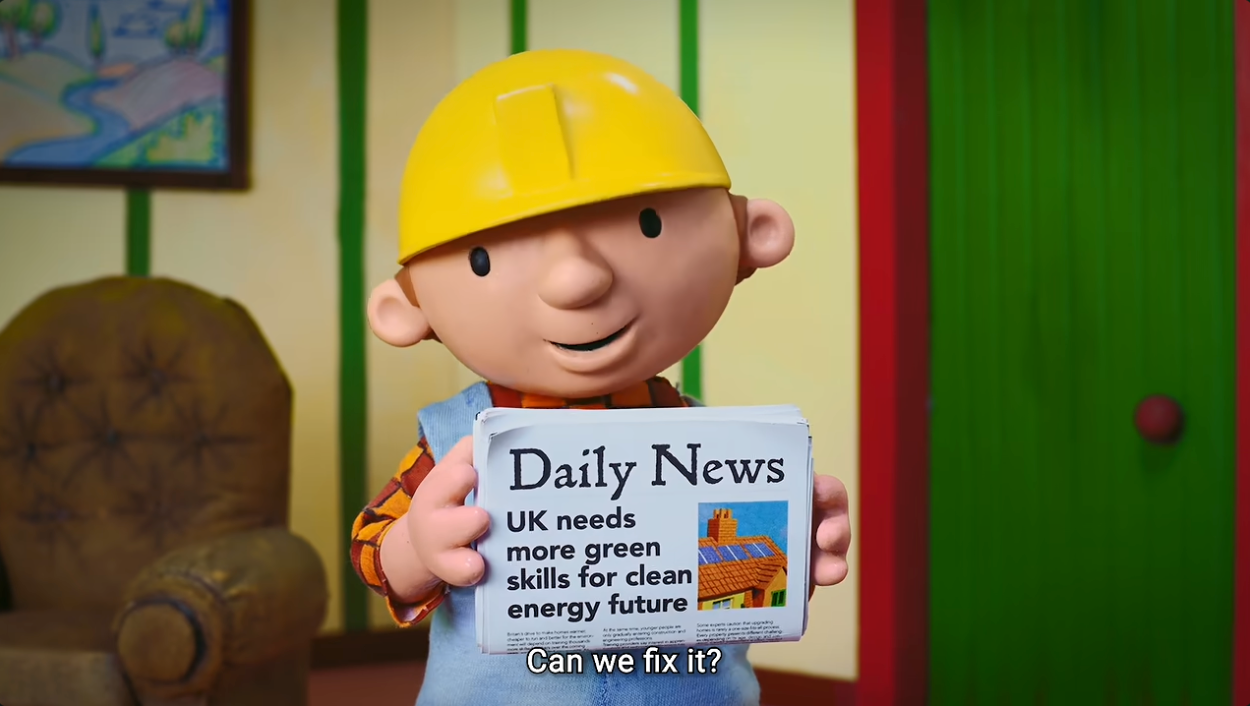
Turns out even Bob the Builder needs to upskill.
Nearly 30 years after he first asked whether we could fix it, E.ON Next has brought Bob back to tackle a very 2026 problem: Britain needs more people who know how to install the technology powering its energy transition.
And they’ve resisted giving him a glossy reboot. Bob returns in his original stop-motion form, with Neil Morrissey voicing him for the first time since 2011. This time, he’s enrolling at E.ON’s Net Zero Training Academy to learn about solar panels, home batteries and other low-carbon technology.
There’s something pleasing about watching a childhood character realise the world has moved on while he was away.
Cartoons are tiny time capsules. Watch one from your childhood with a kid now and eventually they’ll wonder why nobody has a smartphone, what that enormous television is doing or, presumably, why Bob isn’t fitting EV chargers.
That makes him a surprisingly neat vehicle for talking about changing skills. E.ON found 31% of energy-sector professionals believe the workforce isn’t yet fully equipped for the transition, while its own academy trains around 800 people each year. Applications for degree apprenticeships have more than trebled since 2023.
The nostalgia gets attention, but there’s something real underneath it. Bob has always represented practical work, problem-solving and learning by doing. Updating what those skills look like allows an old character to make a very new kind of job feel familiar.
Turns out “Can we fix it?” still works.
The toolbox has just had an upgrade.
MOTHER KNOWS BEST
Apparently every pop rollout now needs a cultural godmother.
Dazed has christened it “motherbombing”: younger artists surrounding themselves with people whose cultural relevance predates TikTok, Instagram and, in some cases, the internet itself.
Adéla has built a song and video around Nicole Kidman. Charli xcx recruited Martin Scorsese, Marc Jacobs and John Cale for the cover of Music, Fashion, Film. Troye Sivan sampled Madonna and brought Sir Ian McKellen into the accompanying video. Madonna herself turned up during Sabrina Carpenter’s Coachella set earlier this year.
Celebrity has always enjoyed a good intergenerational handover. What feels particularly 2026 is how useful longevity has become.
TikTok can turn an artist into a household name before half the household has worked out who they are. The harder trick comes afterwards. Attention moves quickly, algorithms move quicker and yesterday’s main character can become tomorrow’s “whatever happened to?”
Standing beside someone who has survived several decades of changing tastes gives a newer artist a little historical gravity. There’s an exchange going the other way too: established names re-enter younger feeds, fandoms and conversations without having to perform youth themselves. Dazed describes it as a circulation of “celebrity capital” between generations.
Perhaps that’s why the old “passing of the torch” suddenly feels more organised. Less ceremonial handover, more cultural buddy system.
Going viral can give you a moment. The increasingly interesting question is who manages to turn that moment into a career people are still referencing twenty years later.
Mother knows best, apparently.
Bi-lingual Lockups – So nice, do twice
What does a cinema sound like before you’ve even sat down?
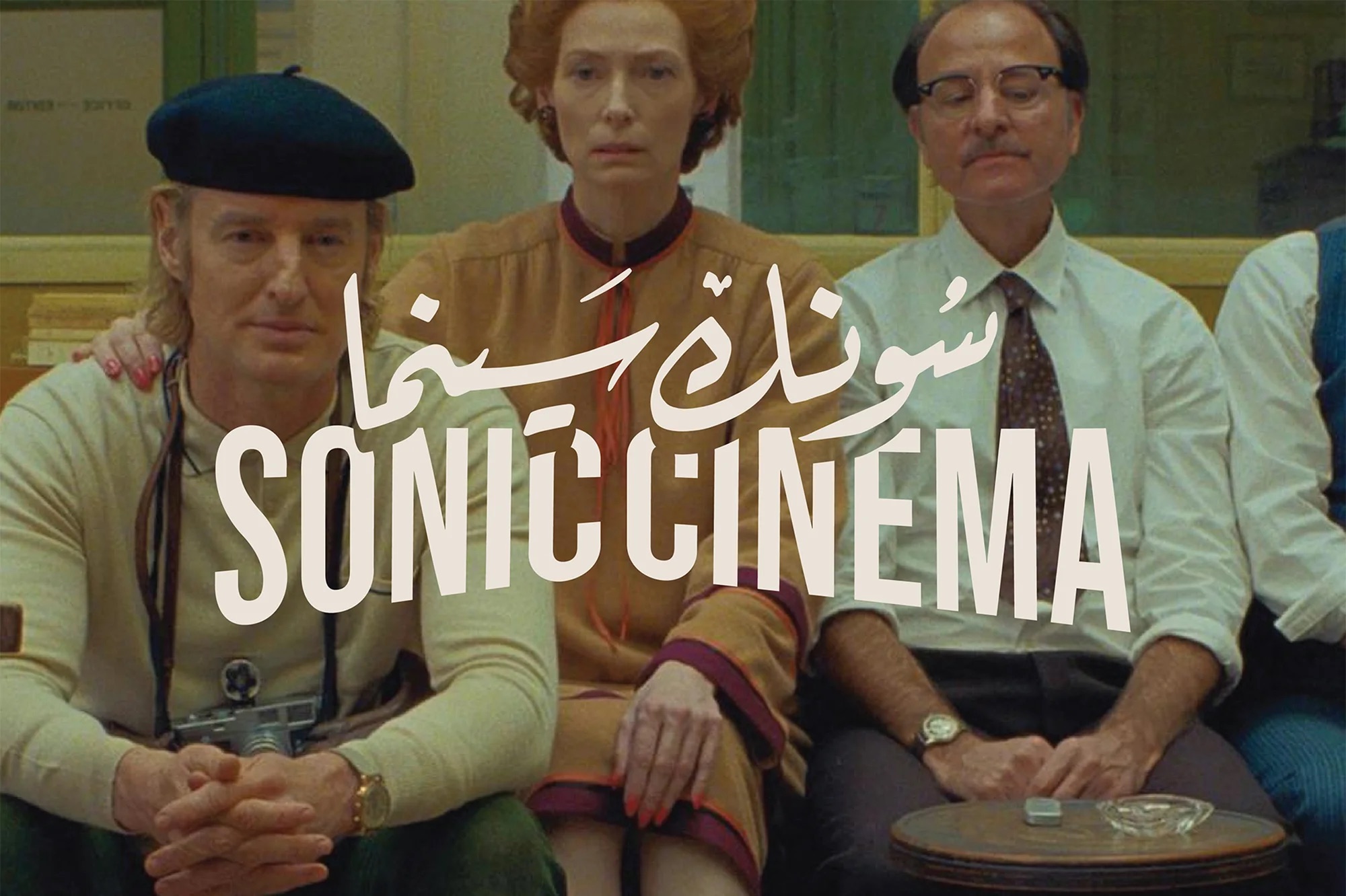
That’s the question Kuwaiti design practice Studio Rally set out to answer with its new identity for Sonic Cinema, a company that designs and builds private home cinemas.
The idea is simple. A small rectangle represents the screen, while lines fan out from it like sound and light moving through a room towards the audience. That same wave shape frames the logo, stretches across the wider identity and even ends up woven into a blanket, where the branding disappears completely but the idea still holds.
It’s the bilingual lockup that really caught our eye.
Arabic sits above Latin, but neither feels like an add-on. The Latin uses a condensed sans serif pulled into a gentle arc, while the Arabic is hand-lettered in Ruq’ah, drawing on the character of old Arabic film posters. Each language keeps its own rhythm, but both live inside the same visual system.
Which made us look a little closer to home.
We’re used to seeing Irish and English share a sign. It’s rarer to see them share the creative idea.
That distinction feels important. Bilingual design gets much more interesting when translation isn’t treated as something to squeeze underneath afterwards, but as raw material from the beginning – different sounds, letterforms, references and rhythms all shaping the identity.
Ireland gives designers plenty to work with here. Two languages already live side by side across our everyday visual culture.
The opportunity might simply be to let them play together a little more.