
In this week’s Our Take: Vaseline makes a bloody point, art as collective experience, cinema comes back like a sequel, and is society settling for honesty?
Vaseline Fronts Up For Runners
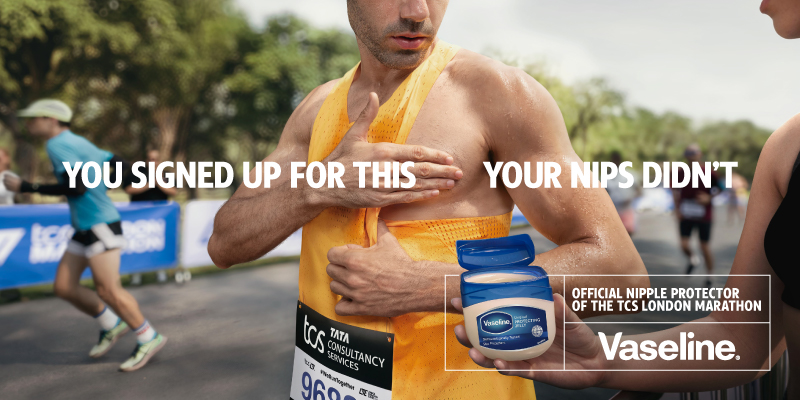
Months of training, long runs, early alarms and a discipline that would impress your future self. But somewhere in all that prepping for the infamous London Marathon, one problem rarely gets talked about: your nipples.
Vaseline has stepped in as the official nipple protector of this year’s race, turning a very real runner problem into an official job title nobody saw coming.
With research showing that 92% of runners experience painful nipple-chafing, and many already relying on vaseline anyway, the brand has simply formalised what was already happening in pre-race routines everywhere. No reinvention required. Just pride in a small problem taken seriously enough to make it official.
And impossible to ignore once it’s been said out loud.
Less gallery, more gathering
Searches for “third space near me” are ever increasing but it’s not space people are searching for. It’s each other.
After years of solo everything, culture is shifting from something we consume alone to something we experience together. And the arts world is leading the way in engaging its community.
Creators like @killgallery are calling it out – a move away from static, white-wall exhibitions towards something more embodied, more social, more participatory. Less ‘don’t touch’ and more ‘come sit with us’. The art creator shared examples of shows like Serpentine Galleries’ Peter Doig exhibition, which leans into atmosphere and shared experience over traditional display, and Devon Turnbull’s listening rooms at Lisson Gallery – spaces designed for collective, intentional listening.
Maybe the third space was never about the space at all, its about who you’re standing next to in it?
Long Live Cinema

We’ve all heard it before. Attention spans are gone. Gen Z can’t sit still. Everything has to be short, easy to digest and scrollable. And yet, here they are choosing to sit in a dark room for two hours. On purpose.
This isn’t some sudden appreciation for classic cinema. After years of being always on, always available, always consuming, the appeal of switching off is hitting different. No notifications, no second screen. Just one thing, start to finish. Cinema demands your attention in a way nothing else really does anymore. You can’t skip it, half-watch it, or speed it up. You just have to be there. Fully.
The data backs it up. Industry forecasts are pointing to 2026 being one of the biggest global box office years in recent memory, with revenues expected to hit around $35 billion, the strongest since before the pandemic.
From Barbie to the Devil Wears Prada 2, films are landing as proper events again. People aren’t just watching, they’re making it a moment.
Society’s Mirror?

There’s a growing trend of on-screen relationships portraying the harsh reality of people supposedly settling. Films and shows like Materialists, The Drama, and Beef season two don’t bother selling the romantic fantasy – they’re more interested in the messy compromises underneath.
People have always married for complicated reasons beyond just love. Companionship. Security. Loneliness. What’s changed is that cinema has stopped pretending otherwise. Audiences used to dating-app logic can’t suspend disbelief for transcendence anymore. On-screen trends, like with most other trends, often mirror societal shifts, probably because it’s often a good way of convincing people to come see your movie or binge your show.
If there’s a cultural shift to note, it’s probably not that people are ‘settling’. It’s that they’re being more honest about it.