
In this week’s Our Take: cute humanoid robots soften the future, Disney reminds us what human creativity looks like, a viral toilet becomes the internet’s hottest billboard, and illegal raves prove people still crave spontaneity.
Cute Hoovers
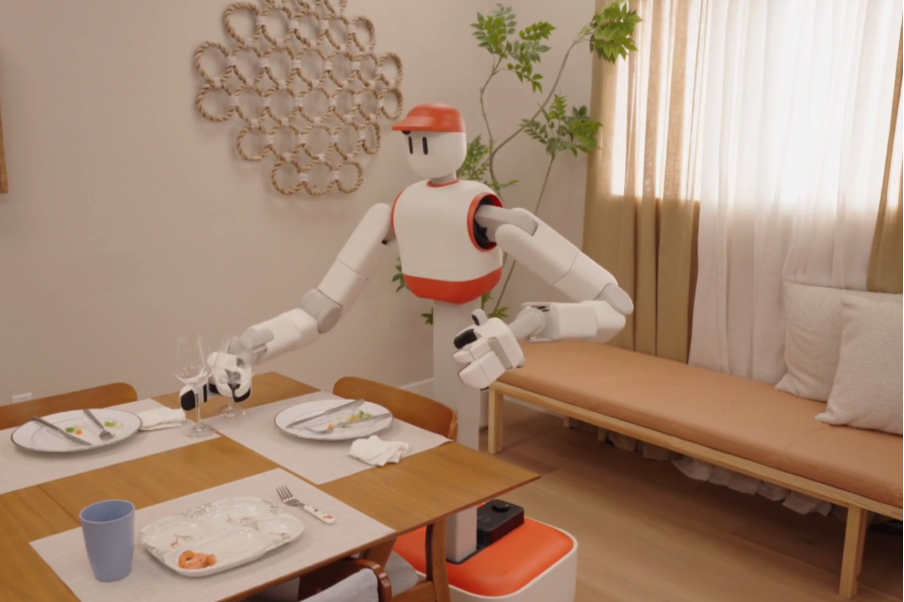
While we’re still adapting to robot vacuums and self-driving cars, the tech world has moved on, to the next wave of friendly humanoid robots.
Until now, most humanoid robots have felt cold, dystopian, and slightly unsettling. But as brands begin to understand our natural attraction to cuteness and emotional connection, robotics companies are shifting toward a softer, more approachable “friendly future” aesthetic.
Some brands are getting closer than others. Here are a few leading the way:
Sunday: rounded, playful robots designed to help around the home
Familiars: furry, emotionally supportive companion robots
AIBI Pocket pet: a modern evolution of the Tamagotchi
Sprout: soft, everyday companion robotics with a gentle aesthetic
New humanoid robotics brand Sunday, with its robot Memo, is currently leading the cute revolution. Memo feels less like a machine and more like the perfect helpful companion, assisting with dishes, laundry, studying, and setting the table.
From its sunshine-yellow branding and rounded corners to soft secondary colours and interchangeable robot hats, Sunday has placed friendliness and approachability at the core.
The strategy appears to be working. Following Memo’s launch announcement, reports claimed the company received more than 10,000 job applications from employees at major tech companies including Google and Tesla. Within just three months, Sunday has been valued at $1.15 billion.
That’s very cute indeed.
More than a translation, a performance.

For a studio famous for its talking animals and magical kingdoms, Disney’s latest release might actually be one of its most magical (and moving) yet: fully reanimating and reimagining three of its most popular songs in American Sign Language (ASL) to celebrate National Deaf History Month on April 27th.
And no, we don’t mean a simple translation or an extra subtitle layer.
Disney completely rebuilt musical sequences from Encanto, Frozen 2 and Moana 2 around the performers’ movements, rhythm and expressions. Those performers, by the way, are part of Deaf West Theatre, helping create a final result that feels closer to choreography than translation. Or, as Forbes perfectly described it: “Poetry in Motion.”
And honestly? It feels SOOO refreshing to see something like this made entirely by humans. In a creative industry currently drowning in AI slop and ‘automation tools’, Disney’s ASL performances feels warm, intentional and crafted with care.
A NEW AD KING IS THRONED

“Unemployment final boss trying to make $1,000,000 from my toilet,”.
This quote is taken from the IG bio of Nick Greenawalt, who has flushed advertising norms down the drain by using his actual toilet as an ad platform, and it’s gone viral.
It started as a joke; just another of Greenwalt’s posts about being jobless, projection mapping mock ads onto his toilet. But his ridiculous innovation caught on . His unlikely ad space has amassed over 50 million views across different social channels, and big brands such as Microsoft Teams, Clorox and Moonpay are queuing up to buy ad space. Greenawalt is getting closer and closer to that final boss of $1 million.
This is a prime example of how big brands love to jump on viral trends, and how sometimes the most ridiculous ideas are the ones that gain traction, grab attention, and perform the best..
Hats off to Greenawalt too, for pulling off the silliest, most creative moneymaking scheme we’ve seen in a while!
Rave New World

Illegal raves were supposed to disappear. Instead, they’ve become headline events.
This week, up to 40,000 ravers gathered at a military firing range near Bourges for an illegal “free party” – despite warnings about unexploded World War II bombs buried beneath. The rave was organised in protest against proposed anti-rave laws in France. In classic Streisand effect fashion, cracking down on unregistered raves created the biggest party of the year.
In Dublin, Dublin City Council recently moved to curb late-night crowds gathering on Drury Street after it organically became one of the city’s busiest social spots. There’s no official infrastructure – just hundreds of people choosing to stand outside, chat, drink coffee, flirt and smoke. Naturally, the response was restrictions.
City administrators may say they want vibrancy, nightlife and culture, but often seem deeply uncomfortable with people congregating unless it’s controlled, ticketed or commercially managed. But what makes spaces like Drury Street resonate is precisely the lack of structure. They feel spontaneous and human. Our take: just let the people party.