
In this week’s Our Take: Pride takes a fall, bots take over the net, AI cuts through (buildings), and AI gets barred from a Dublin pub.
PRIDE UNDENTED
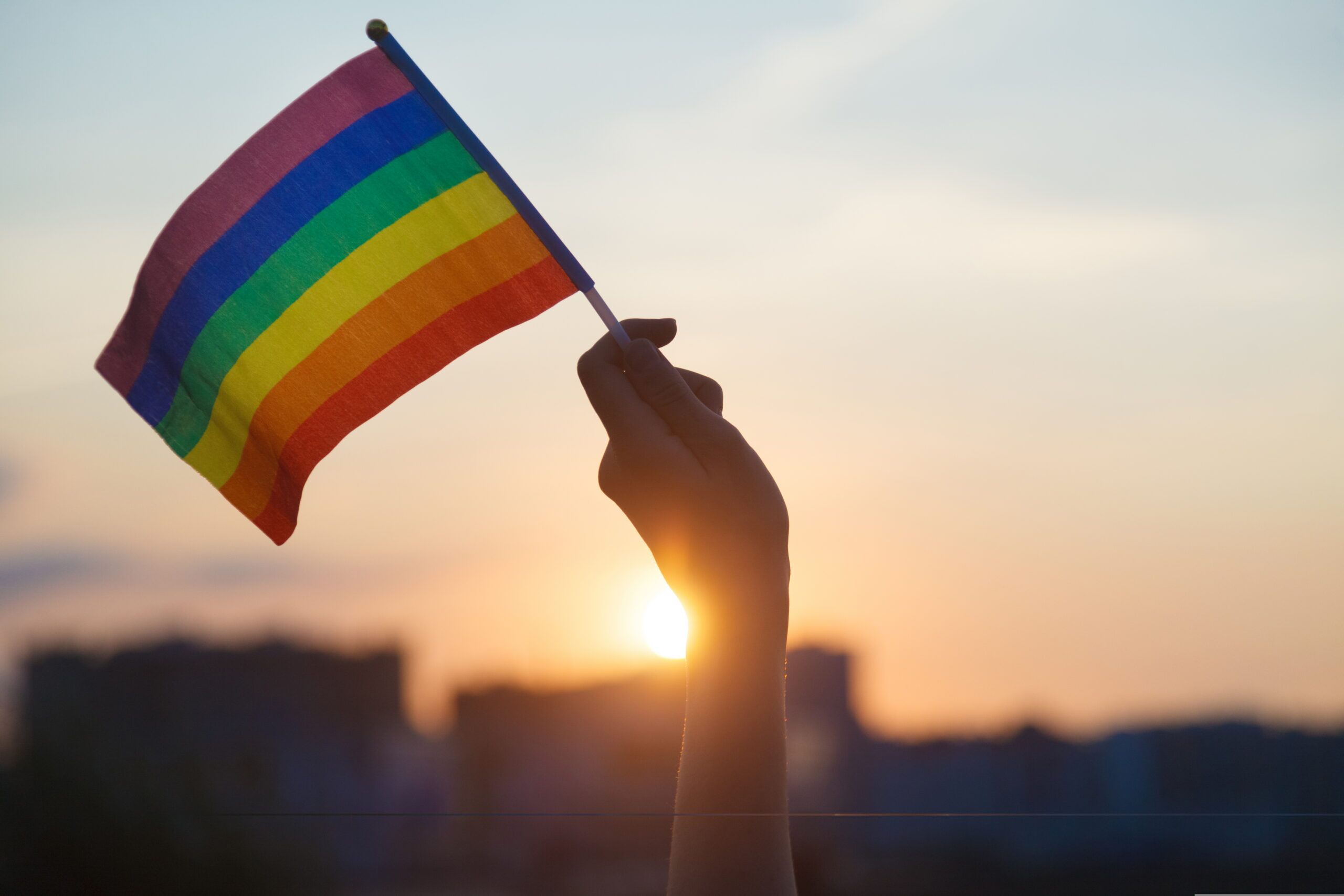
Corporate Pride support is collapsing in 2026. Sponsorships are down across New York, Orlando, Pittsburgh and beyond. Phoenix Pride has filed for bankruptcy. You know why. The US administration’s dismantling of DEI has made rainbow visibility costly for any company with government exposure, and rather than stand firm, most have quietly folded their flags. Brave stuff.
Dublin hasn’t been immune. Some multinationals have stepped back from their partnerships this year. But tomorrow’s parade will be unaffected: the main sponsor of Dublin Pride is Dublin City Council itself, and over 100,000 people are expected on the streets.
It’s also worth noting that Dublin Pride has always offered companies the option to march without branding. The political and social environment here wasn’t always exactly LGBTQ+ friendly, so quiet support was always available to those who wanted it.
Here’s the thing about corporate Pride support: when they turn up, it reflects the movement’s success. When they’re afraid to be seen, it just shows how much work remains. Pride started in defiance of mainstream intolerance, and won. The corporates were late to the party. And the party will go on without them.
HUMANS NOW OUTNUMBERED BY BOTS
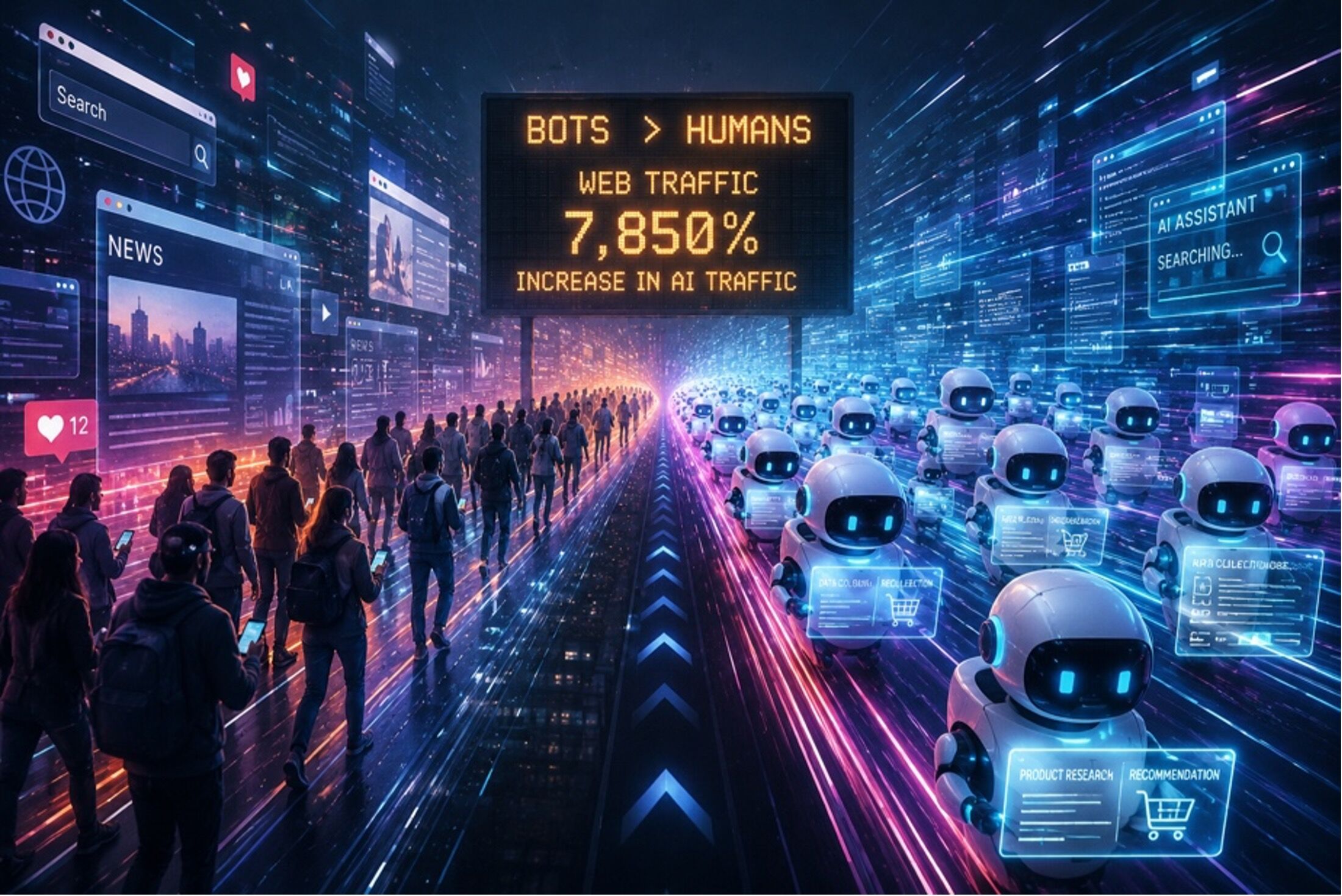
We all know AI can write emails, generate images, etc… but here’s something we didn’t have on our 2026 bingo card: AI is now one of the internet’s biggest users.
According to the report by CNET, AI-driven traffic has increased by 7,850% in the last year. (we double-checked – that’s not a typo) with bots now generating more web traffic than humans. Not because they’re posting memes or doomscrolling, but because AI agents are browsing and completing tasks for us.
Now… if the internet was built for people, what does it look like when people aren’t the only ones using it?
For years, brands have obsessed over understanding internet users: what they search for and what they click. Now there’s a new audience entering the mix: AI. Not as customers, but as the tools people increasingly rely on to discover information, products and brands. Does that change how we create content? How we communicate? Or is this simply the next evolution of the web?
TROMPE L’AI
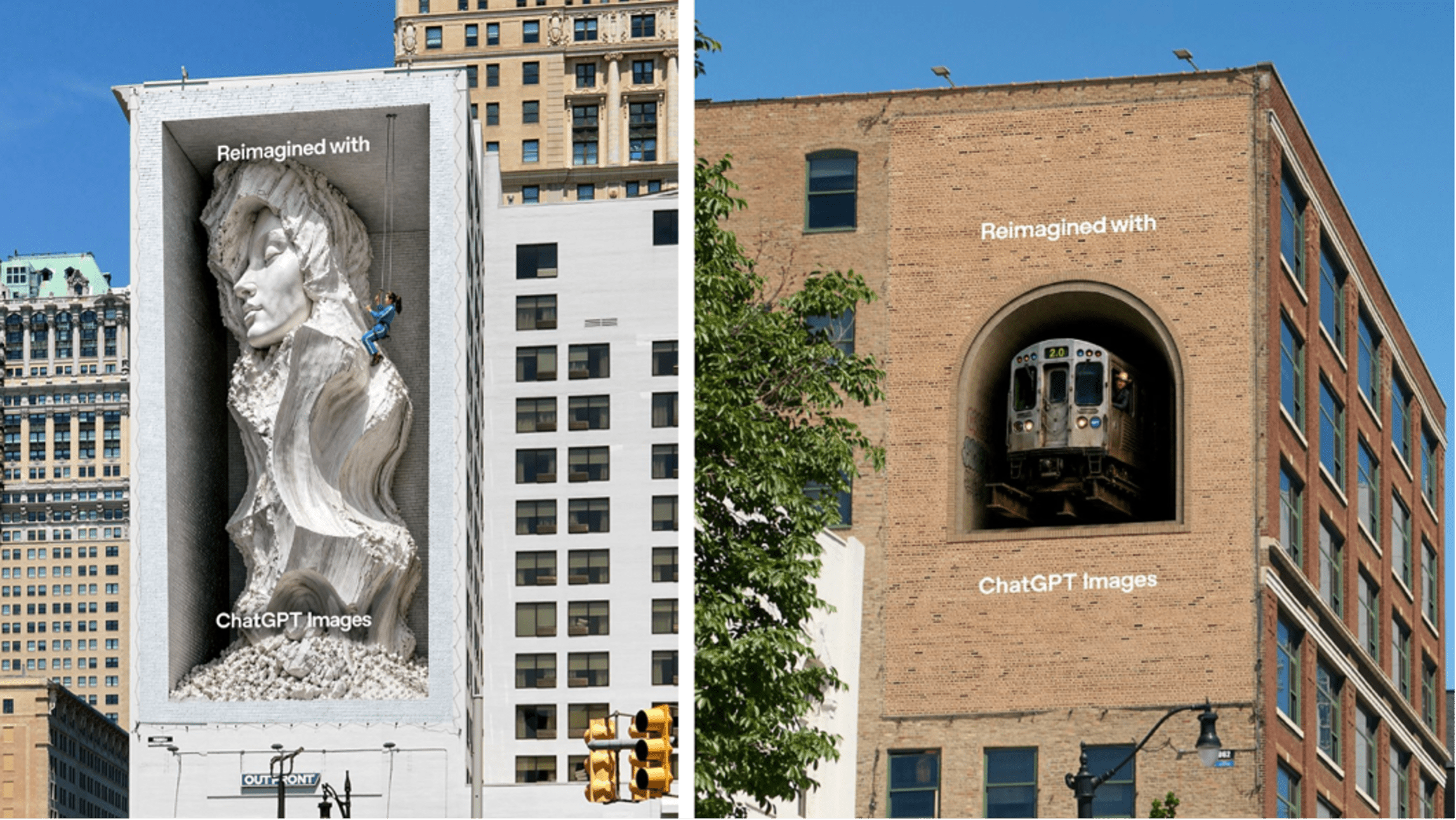
OpenAI’s “Reimagined with ChatGPT Images” is basically AI saying: “what if I just punched a hole in a building and called it art?”
Marble faces bursting out of brick, trains ripping through arches – it’s loud, a bit ridiculous, and weirdly effective.
Why? Because it stops treating the wall as a media space and starts treating it as the material. Most AI out of home looks like it’s been pasted on after the fact. This doesn’t. It feels like the building and the idea were briefed together.
And there’s something funny about it too. AI, the most weightless tool we’ve ever had, trying to prove itself by smashing through brick and marble like it’s suddenly very physical. Bit much. But it works.
It also contrasts in an interesting way with the Obama Presidential Center approach – where the lettering is carved out of the structure itself. In some ways, a similar effect, but it’s very real, and very permanent, and it resonates very differently to the flashy spectacle of ChatGPT’s installations.
“SORRY AI, YOU’RE BARRED”
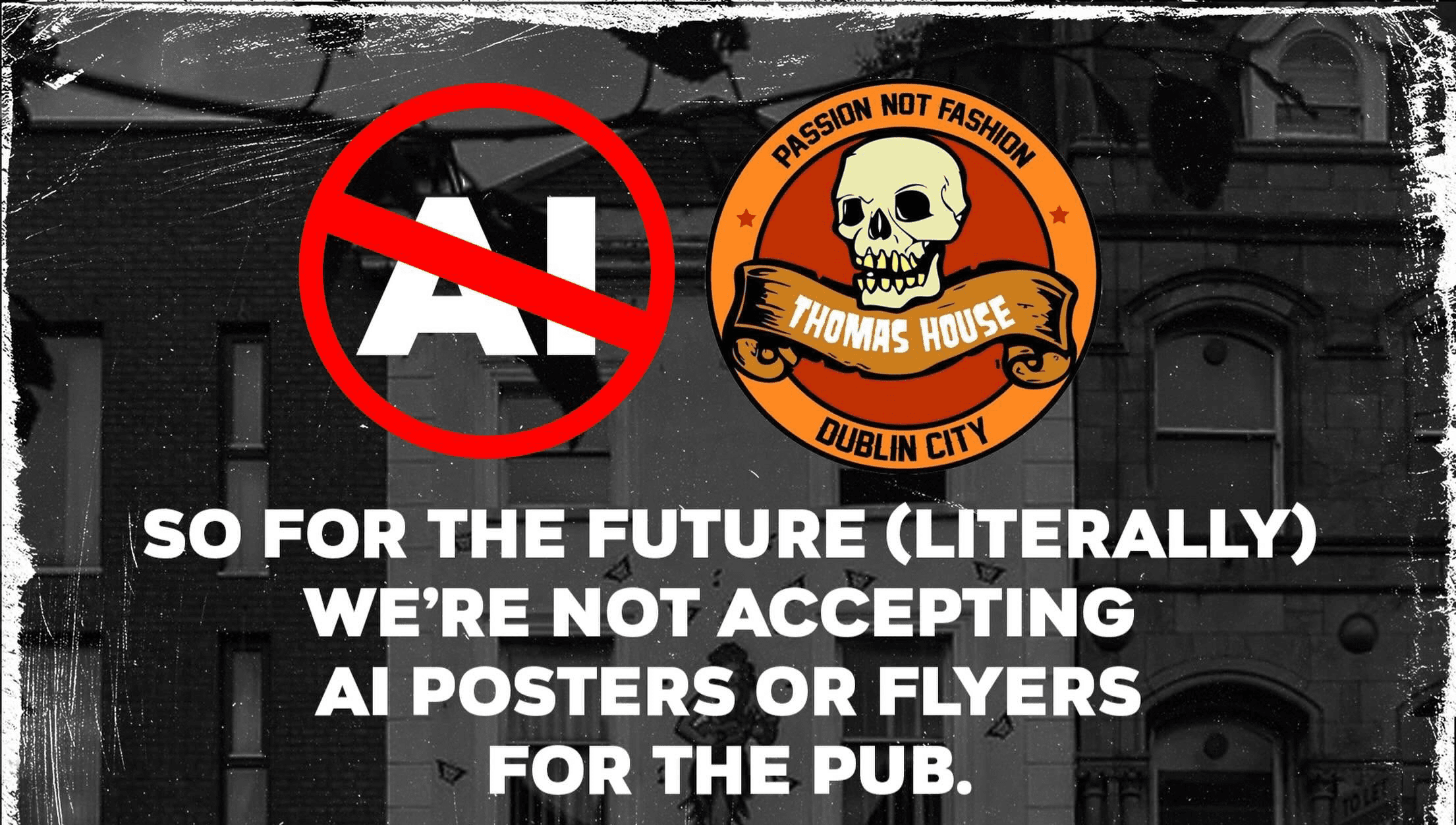
We love how useful AI can be, but there’s no denying that the deluge of slop is… less than ideal. A Dublin pub has drawn a line in the sand, announcing it will no longer accept AI-generated posters or flyers on its walls. Instead, it’s encouraging bands, promoters and event organisers to work with real artists and designers, even offering to help connect them with local creatives.
Pubs have always been venues, noticeboards, meeting points and cultural hubs. Those posters on the walls are evidence of a local scene built by musicians, artists, promoters and regulars who all knew one another. That disappears when everything looks the same. And there’s the small matter of Thomas House being smack back in the middle of one of the city’s most creative hotbeds, a stone’s throw from NCAD, and just down the road from the Digital Hub. As they say themselves, “we’re right next to Ireland’s biggest Art College, lads. It’s not a good look.”
Their decision has resonated far beyond one pub. It’s less a rejection of technology than a vote for participation. The pub is asking people to be creative.
The Craic Can’t Be Prompted!