
In this week’s Our Take: travellers chase local legends, a sale sticker exposes the pension gap, community builders get us off the sofa, and Apple stitches its way back into our good books.
Your Holiday Needs Better Lore
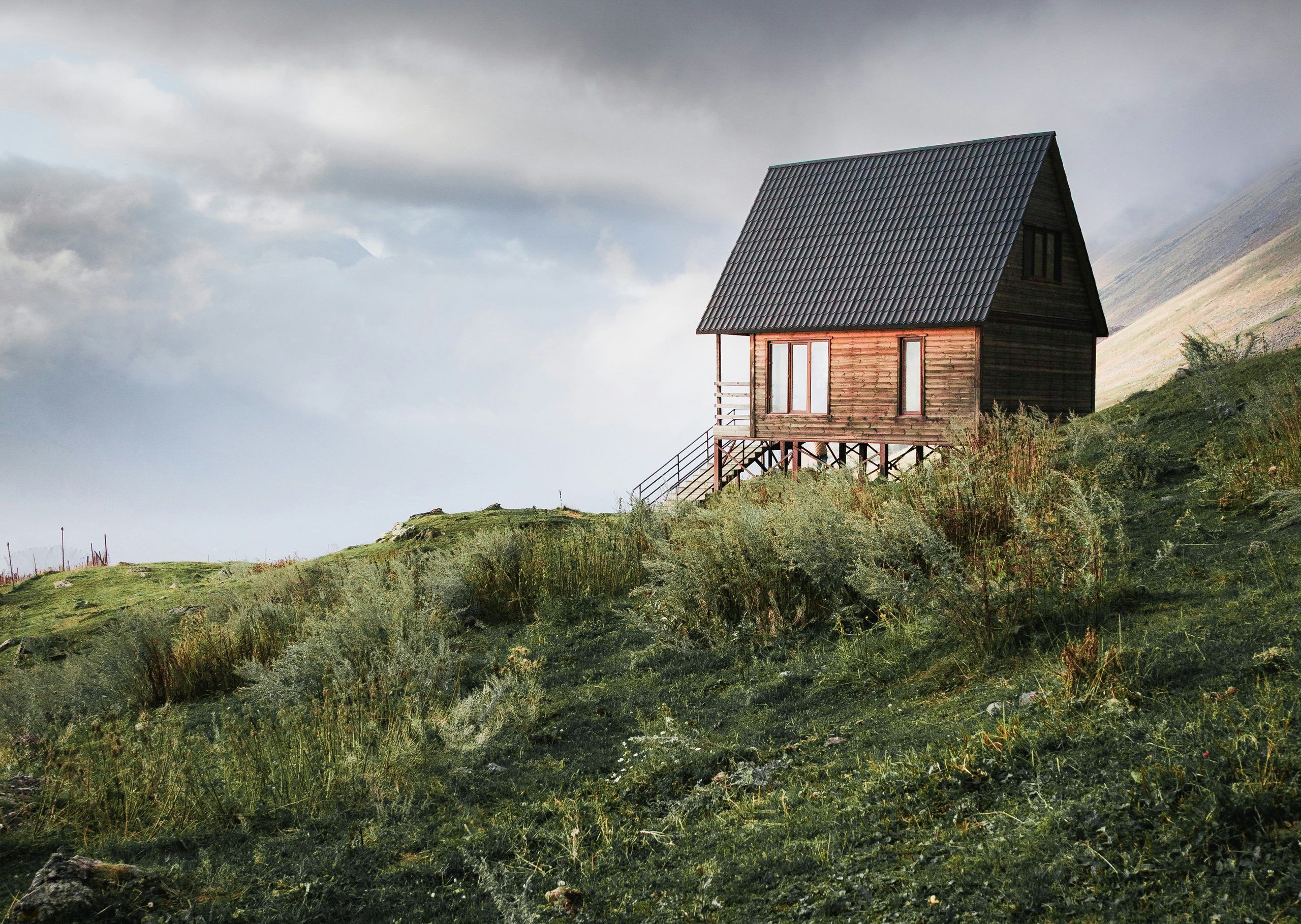
Somewhere along the way, having a nice hotel and a decent restaurant stopped being enough. Now your destination needs a backstory.
Airbnb has identified “lore tripping” as a growing Gen Z travel behaviour. Trips are built around the strange stories, local legends and slightly odd details that give a place personality. Its research found 90% of Gen Z respondents were interested in small towns and under-the-radar destinations for autumn travel, with affordability, local culture and one-off attractions among the biggest draws.
The destinations read less like a conventional bucket list and more like something you’d discover three hours into Wikipedia. Point Pleasant has Mothman, the winged creature allegedly spotted there in the 1960s. Gibsonton was once an off-season home for travelling circus performers. Bemidji has enormous statues of Paul Bunyan and Babe the Blue Ox.
There’s something very Gen Z about travelling for the story you’ll come home with. After years of feeds serving up the same infinity pools and “hidden gems”, it’s refreshing to see places with a bit of weirdness. A town becomes more memorable when there’s something to investigate, retell or mildly obsess over.
That gives destinations – and the brands inside them – an interesting opportunity. History, folklore, local characters and peculiar rituals suddenly become valuable creative assets.
The perfect holiday photo still matters. It just helps if there’s a good story behind it.
The Motherhood Discount Nobody Asked For
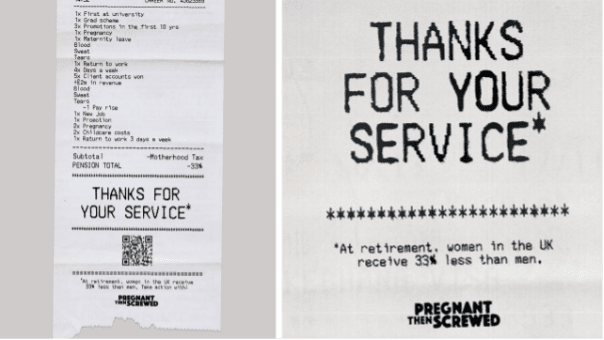
Thanks for your service* is a new campaign from UK charity Pregnant Then Screwed highlighting the gender pension gap. Across billboards, print and social, women are covered with giant sale starbursts, using a headline figure that women can end up with pension pots around a third smaller than men’s.
The campaign gets more uncomfortable the closer you look. Receipt-style executions itemise pregnancy, returning to work, nursery fees, redundancy and years of caring before arriving at the final total: the “Motherhood Tax”.
Pensions are particularly good at hiding bad news. The consequences of taking time out, reducing hours or contributing less can sit quietly in the background for decades before eventually showing up at retirement. One YouGov survey cited alongside the campaign found that 42% of low- and middle-income mothers who had reduced pension contributions felt they had little or no choice because of childcare.
Perhaps that’s why the sale sticker works so well. We’ve spent our entire lives being trained to understand it instantly. No financial literacy required. No graph. No 48-page report. Something has been marked down.
Apple… made handmade
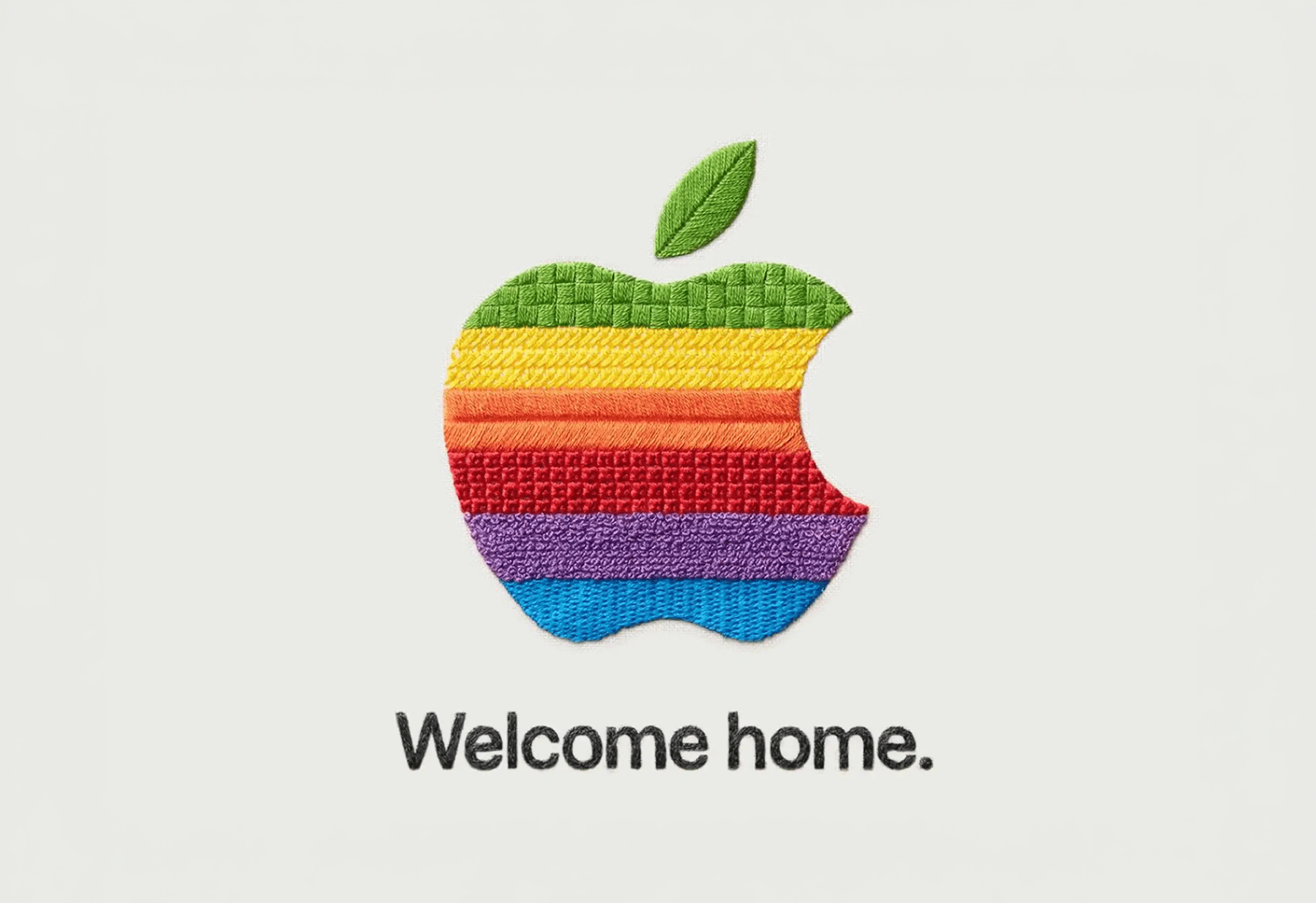
Apple has spent decades selling its customers the future, with cool and sleek devices and futuristic visuals. So, to announce its latest “Welcome Home” event, it did something very simple but quite unexpected: it picked up a needle and thread.
The teaser features Australian twin artists Maricor and Maricar embroidering Apple’s well-known rainbow logo, stitch by stitch. No flashy CGI, no futuristic interfaces, no AI slop (thank god). Just thread, needle and very patient hands.
It’s simple and quite beautiful, which is definitely a better approach than previous Apple campaigns. Looking at you “Crush!” ad, from 2024, where a giant hydraulic press destroyed musical instruments, books, cameras, etc, to reveal… a new iPad? Apple had to apologise after the backlash of this ad, by the way.
If their previous campaign appeared to destroy human creativity, the other celebrates it. And in a world increasingly flooded with AI content and doing everything faster, seeing actual people make something one stitch at a time is definitely refreshing.
Influence Is Leaving the Feed
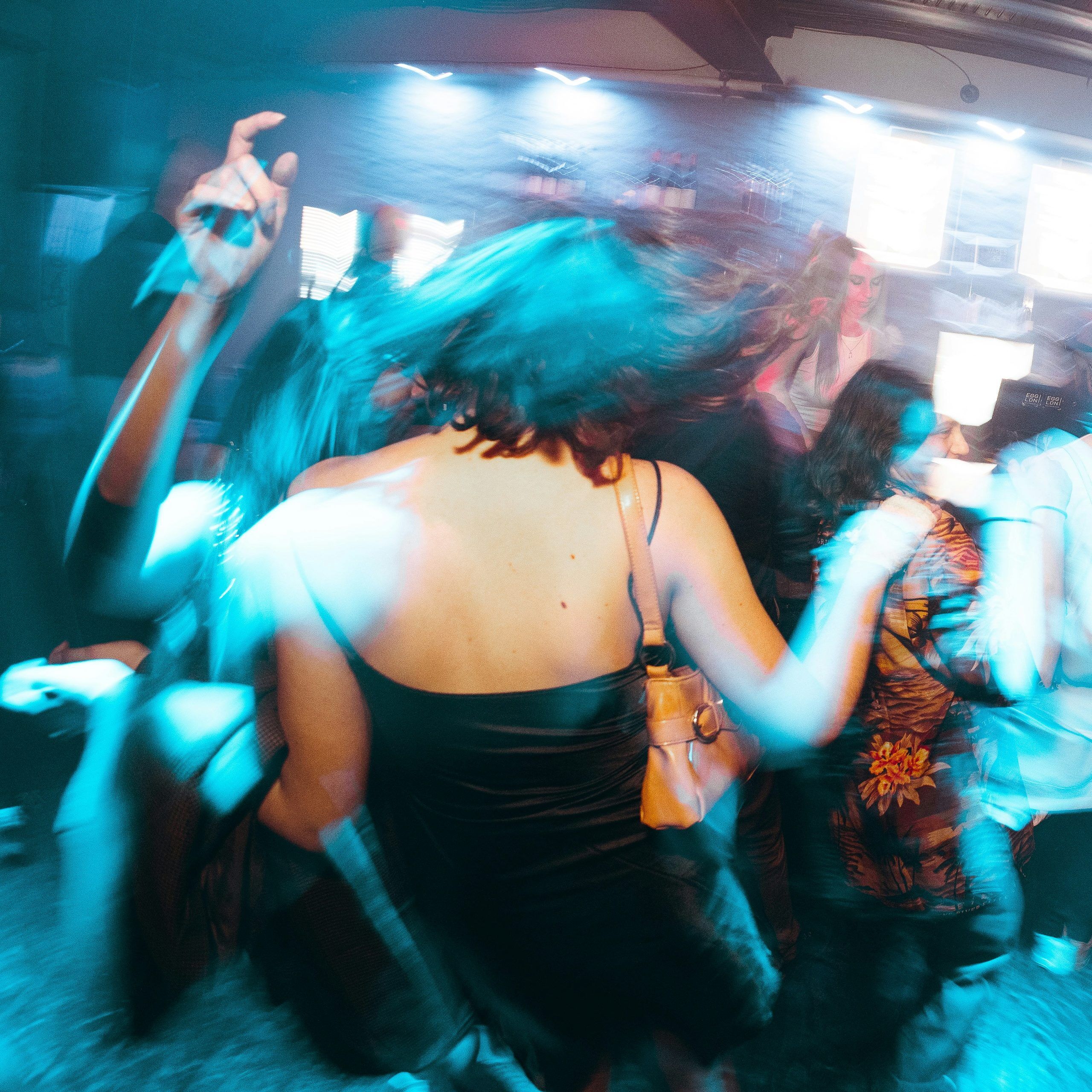
There was a time when making a new friend involved accidentally sitting beside someone in school, work or the pub.
Now there’s often a ticket link.
The Atlantic has been looking at the rise of the “community builder”: the people whose job is to create places for strangers to meet – run clubs, reading parties, adult summer camps – all the things we apparently want to do with other people, provided somebody else has organised the WhatsApp group.
It’s easy to laugh at the amount of infrastructure now required to have a basic social life, but there’s something telling in it too. A lot of the places where friendships once happened by accident have thinned out. Work is remote. Nights out are expensive. People move cities more often. Dating apps have trained us to expect a platform to help with romance, so perhaps it was only a matter of time before one arrived to help with friendship too.
What makes these organisers interesting is that their influence isn’t entirely visible on a feed. Their real skill is getting people off one. A hundred people turning up to a Sunday morning run can suddenly look more culturally useful than a hundred thousand passive followers.
We’ve spent years building technology to make connection effortless.
Now there’s a growing business in convincing us to leave the house.