
In this week’s Our Take: Women land an important campaign, a book club becomes a book rave, back-to-basics butter branding, and an unlikely hit crawls out of a game-inspired subculture.
Who Runs The Runway? Planes GIRLS

Nike has taken “girls on the runway” very literally.
Last weekend, 5,000 women took over London City Airport’s runway for the sold-out Nike After Dark Tour: a 10K through the Royal Docks, complete with DJs and a performance from PinkPantheress. Frankly, that beats staring at the same lamppost for your fifth lap of the park.
But the After Dark bit carries more weight than your average event name.
For plenty of women, an evening run comes with its own pre-game ritual: check the route, share your location, avoid certain streets, maybe decide it’s easier to stay home. Sport England found that 60% of women worry about sexual harassment or intimidation when exercising as the evenings get darker.
So there’s something powerful about putting thousands of women on a runway at night and letting the only thing they need to worry about be the actual run.
Nike hasn’t solved women’s safety with a 10K, obviously. What it has done is build an experience around a barrier its audience knows intimately, rather than pretending that barrier isn’t there.
For one night, after dark meant music, movement and 5,000 women taking up space.
More of that, please.
READ BETWEEN THE BEATS
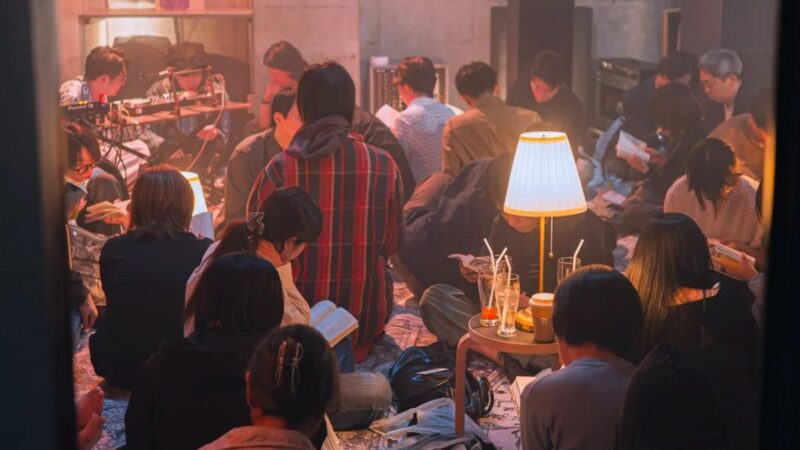
Tokyo’s JUCY BOOK RAVE has politely ignored both of those rules.
The community recently transformed Shimokitazawa’s SPREAD into something halfway between a reading room and a night out: carpets, low lighting, ambient electronica and a crowd quietly reading their own books before the music turned up and the room moved into book swaps, conversation and a little dancing.
A rave where nobody minds if you spend the first hour ignoring them? Finally.
There’s something nicely low-pressure about the whole thing. Reading usually asks you to be alone. Nightlife often asks you to drink, dance, chat and generally prove you’re having an excellent time. JUCY creates a middle ground where you can be around people without immediately having to perform for them.
And that might explain why these slightly odd social formats keep popping up. Run clubs, listening parties, craft nights, silent reading sessions: people seem keen to get out of the house, provided there’s an activity taking some of the pressure off.
Sometimes innovation is simply putting two familiar things in the same room and seeing who turns up.
BYOB.
Bring your own book.
BIT OF BRILLIANT BUTTER BRANDING
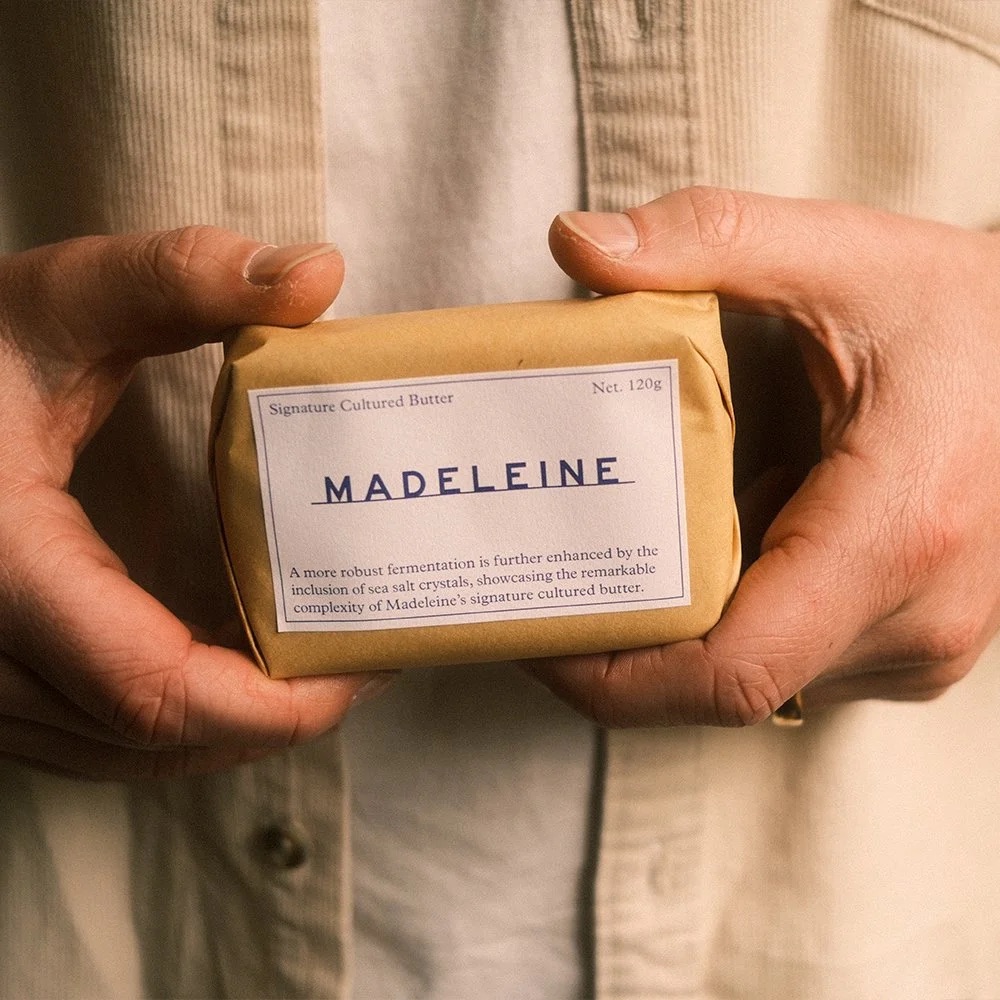
You’d think in Ireland we know butter better than the Aussies, and with the international reputation of our dairy, that we’d have better butter branding than them too, but Melbourne-based design studio Hi-Ho has produced some beautiful work for Madeleine handmade butter.
The packaging goes all in on handmade charm, with kraft paper, simple labels, and an unpolished, rustic logo that somehow has an instant visual signature that feels like it’s been around forever.
It’s butterly brilliant.
CRAWLING INTO THE MAINSTREAM
Fifty Shades of Grey started life as Twilight fan fiction. The Martian was a free blog serial. Now a hit – Dungeon Crawler Carl – has crept out of the nerdiest nook on the net: LitRPG.
LitRPG (“literary role-playing game”) is fiction written as if the characters are inside a video game. They earn experience points and level up. They pick a class. They loot magic items for +3 strength. Yes, it is that literal.
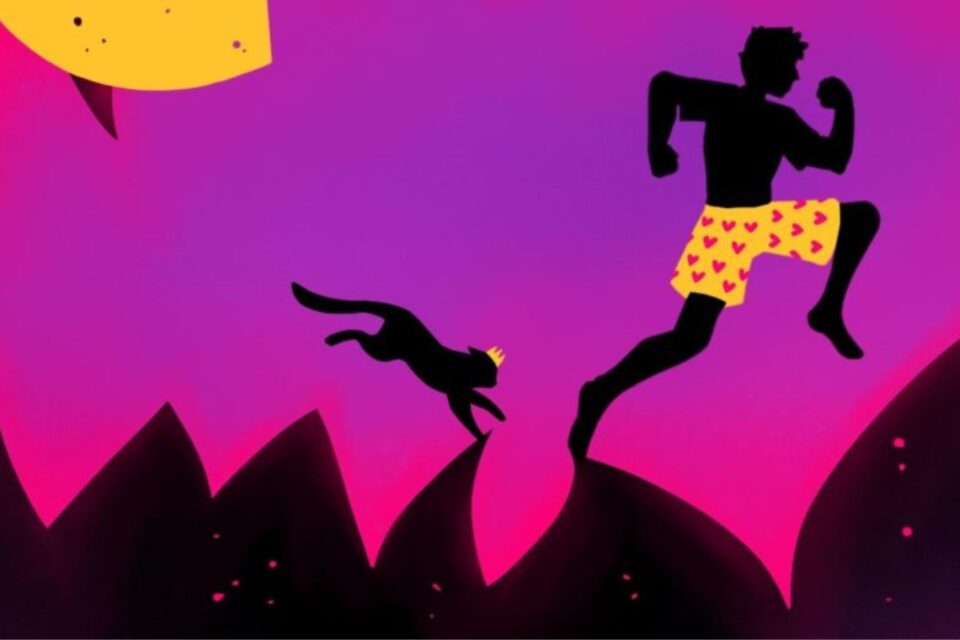
Dungeon Crawler Carl features a former Coast Guard, fighting through an alien dungeon, accompanied by his ex-girlfriend’s talking cat. It’s not for everyone. But it has sold over 10 million copies (mostly via a brilliantly produced audiobook), and is dominating nerd conventions the way Harry Potter once did. And of course, there’s a TV series on the way, so it’s officially mainstream.
The comparison everyone reaches for is The Hitchhiker’s Guide to the Galaxy, which was a hugely influential touchstone for an earlier generation of nerds. DCC doesn’t have Douglas Adams’s inspired phrasing, but there are parallels. Where the Hitchhiker’s saga begins with the world being destroyed to make way for an intergalactic highway, and the tech is dysfunctional and depressed, in DCC, humanity is being wiped out for the sake of an intergalactic reality TV show, and the AI is slowly going insane.
It goes to show that despite a lot of commentary that culture is flatter than ever, subcultures are still thriving, and are still hotbeds for unlikely mainstream(ish) breakthroughs.