
In this week’s Our Take: Nat Geo explores a minimalist campaign, TikTok is the new film school, PR in the age of AI, and for some brands, the afters might come first.
LESS CAN EXPLORE MORE
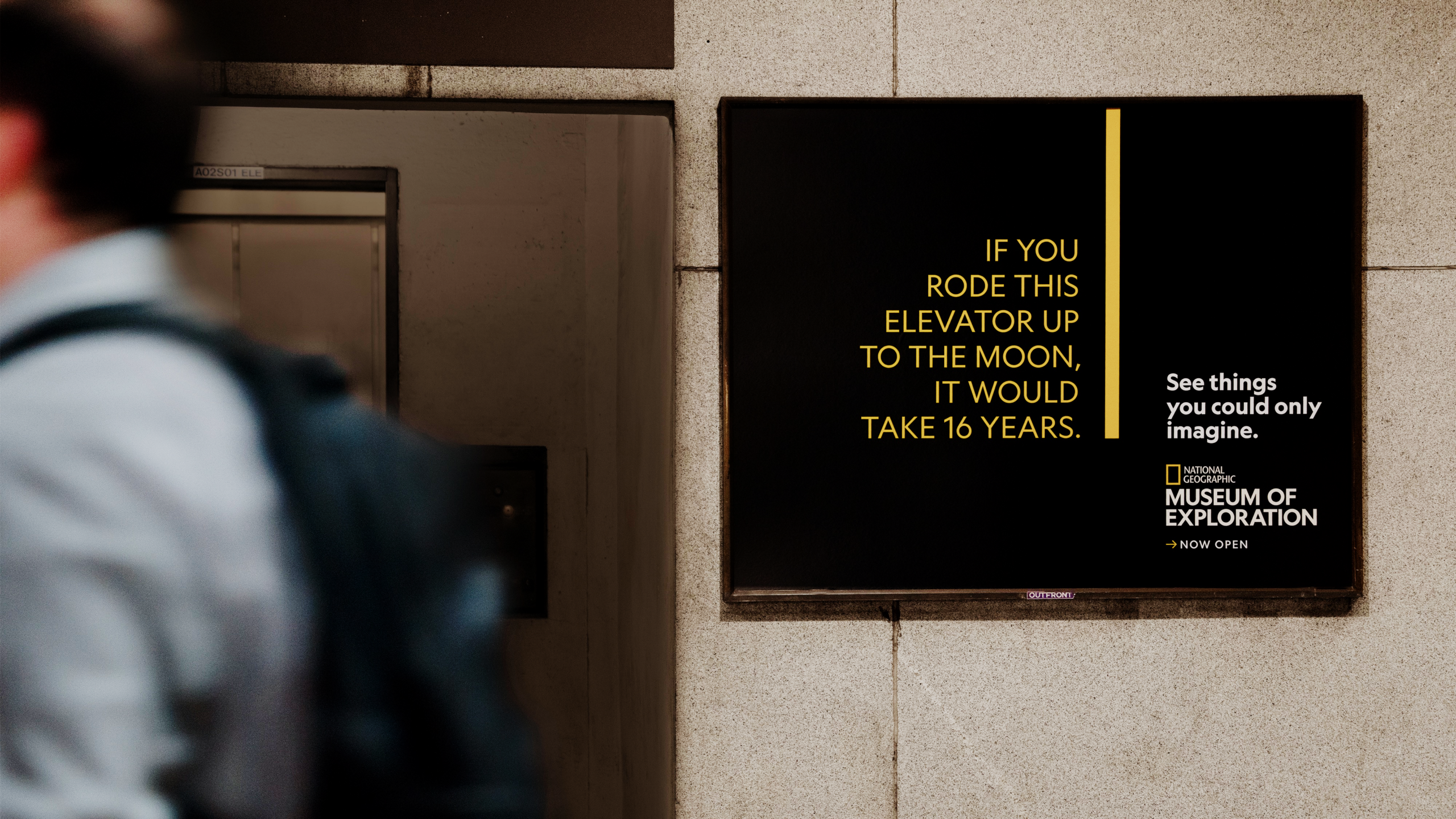
Sometimes the strongest image is no image at all.
To launch its new Museum of Exploration in Washington DC, National Geographic and its agency Terri & Sandy didn’t go for the obvious. There’s no stunning wildlife shots, no dramatic landscapes, not even one of its iconic magazine covers. Just the famous yellow frame (or a variation of it) and a simple invitation to imagine.
It’s a simple reminder that great branding isn’t about showing more. When an asset is iconic enough, it can do the storytelling on its own. The yellow rectangle (and the clever ways it’s reimagined throughout the campaign) isn’t just decoration, it’s the headline and, in some cases, the entire idea.
More importantly, the campaign trusts its audience. Instead of handing over every answer, it leaves room for curiosity and imagination. That’s a bold move in a world where most ads are trying to explain everything in the first three seconds before people scroll or move away.
THE NEW HOLLYWOOD
For decades, the path into film was fairly predictable: write a script, get noticed, convince a studio. In 2026, TikTok is quietly rewriting those rules.
Its new partnership with Sundance Collab recognises micro-series as a legitimate storytelling format, helping creators develop the skills to turn short-form content into filmmaking careers. More importantly, it positions TikTok as Hollywood’s newest proving ground.
Unlike traditional TV, where success is measured months later through ratings, TikTok creators know almost instantly whether a story lands. Every episode generates thousands of comments, theories and reactions, giving creators live feedback as the story unfolds. The comments section has become the new writers’ room.
It’s also changing how talent is discovered. Rather than studios deciding what deserves an audience, creators are building communities first and proving demand before Hollywood comes calling.
For brands, there’s a lesson here too. Audiences don’t fall in love with production budgets; they fall in love with stories. The platforms may evolve, but compelling narratives remain the thing that cuts through. The future of entertainment may not start on a film set. It might start on a phone screen, one 90-second episode at a time. It’s a remarkable evolution for a platform that many still think of as a place for viral trends. Increasingly, it’s becoming a place where the next generation of filmmakers gets discovered.
OUR UN-PR-EDICTABLE INDUSTRY
Not long ago, there was plenty of speculation that AI would make PR less relevant but that a sense of humanity was still needed in day-to-day comms.
As AI search becomes a bigger part of how PR people write, discover and consume content, there is a school of thought that believes that what others say about you is starting to matter more than what you say about yourself.
According to a recent Forbes article, AI models place greater weight on trusted third-party sources like media coverage, reviews and expert commentary than on brand-owned content. That means that when you type ‘What’s the best supermarket in Ireland’ into ChatGPT, the AI tool will look at what’s out there and gather the answer for you based on earned coverage.
For this reason, strong PR, credible storytelling and earned media are becoming key drivers of discoverability. This proves the point that no news is bad news.
THE OFFICIAL NIGHT ENDS EARLY. THE REAL ONE DOESN’T

Ireland has lost 84% of its nightclubs since 2000. Today, there are just 83 regularly active nightclubs across the country. Dublin’s clubs also have the earliest closing time of any EU capital, with venues typically shutting at 2.30am while many European cities keep dancing until 6.30am.
The afters have always been the unofficial final chapter of a great night out. Whether it’s the last late bar, a bag of chips or someone’s gaff, people don’t stop wanting to socialise just because the venue has to close.
Brands spend months planning events, then weeks trying to fill a room. Meanwhile, every Friday night, thousands of people leave concerts, comedy gigs and matches looking for somewhere to keep the night going.
Festivals like AVA understand this. Once the day programme ends, the festival doesn’t. It spills across the city through club nights, venue takeovers and DJ sets. For many people, the afters are just as important as the headline acts.
There’s an opportunity for brands to think the same way. Not by creating another destination, but by becoming the next stop. A late pub takeover after a gig. A late-night menu after a match. A listening party after a live show.
Of course, none of this exists without nightlife infrastructure. As venues continue to close and licensing reform stalls, Ireland is losing the very spaces that make these moments possible. The audience is already there. We’re just hidden away in a randomer’s kitchen in Phibsborough at 4am.