
In this week’s Our Take: A tea brand wants to be appreciated. As art. Aldi heads off a new ‘worldwide’ campaign. AI stores up trouble. And ripped-off writers get some large language payback.
VIEWING A BREWING
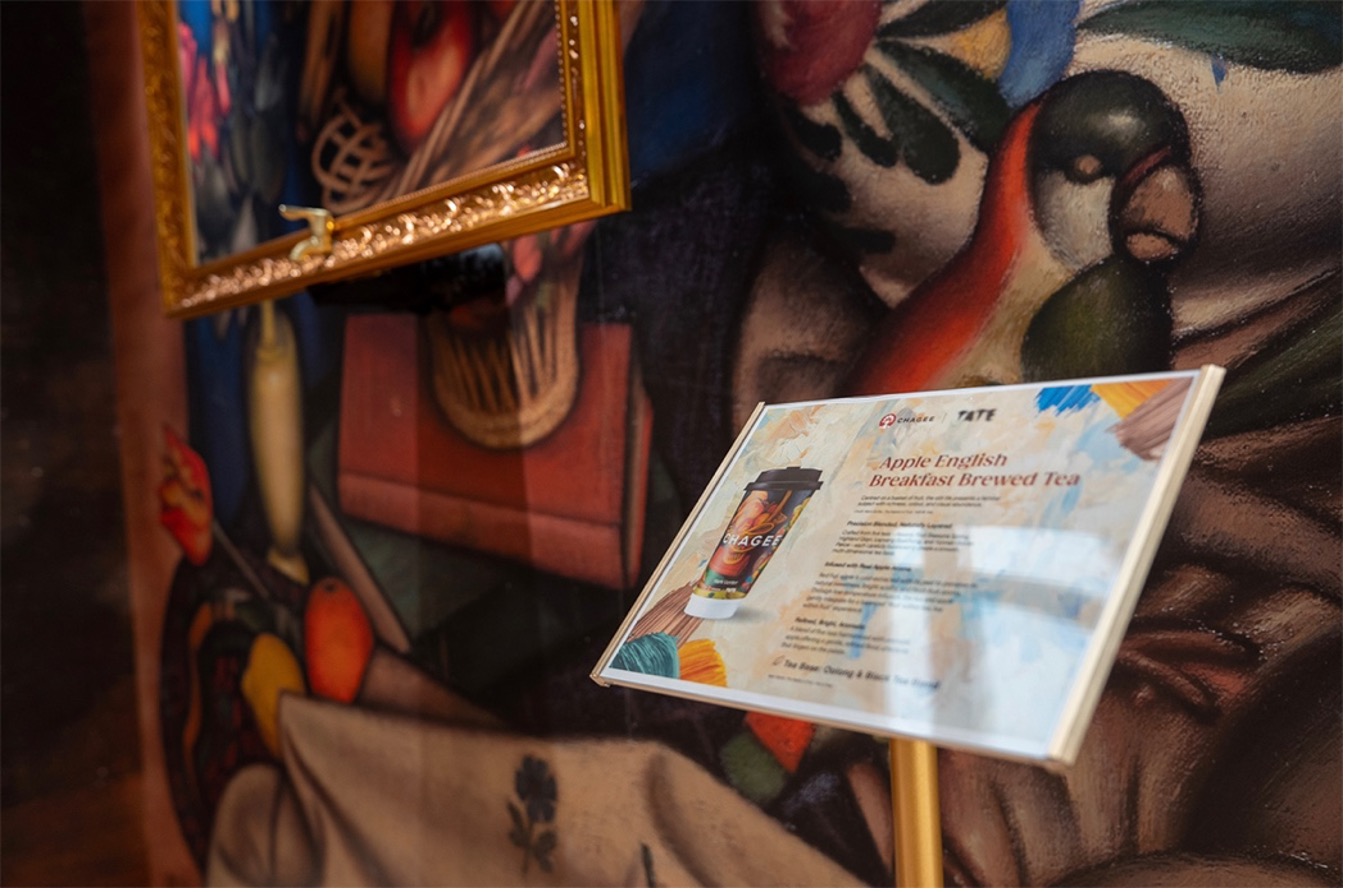
CHAGEE’s latest ‘Sip A New Classic’ campaign treats tea less like a drink and more like an exhibit, borrowing the visual language of galleries to make people stop, look twice and question what they’re actually looking at. It’s less about selling tea and more about elevating the ritual around it.
The idea works because it taps into something much bigger than beverages. We’ve reached a point where the line between retail, hospitality and culture is increasingly blurred. Cafés host exhibitions, galleries have gift shops worth travelling for, and the places we visit are judged as much by how they make us feel as what they sell.
It also makes us question what makes something worthy of attention? Sometimes it’s craftsmanship. Sometimes it’s context. Place an everyday object in a gallery and suddenly people slow down, examine it and assign it new meaning.
Whether you see it as clever branding or cultural commentary almost doesn’t matter. The campaign gets people talking because it asks us to look at something ordinary in a completely different way. And in an economy where attention is the most valuable currency of all, that’s an idea worth stealing.
BALD STATEMENT

Pitbull took something plenty of people might have felt self-conscious about and made it his trademark. Instead of hiding his baldness, he built an entire persona around it.
Fast forward a few years and thousands of fans willingly rocked bald caps at BST Hyde Park, helping him smash the Guinness World Record for the largest gathering of people wearing them. Not bad for a man with no hair.
The joke has never been on him. By owning it from day one, Pitbull took away anyone else’s chance to. Today, dressing as Mr. Worldwide is basically fancy dress with global recognition. That’s branding money can’t buy.
Which is exactly why ALDI’s response worked so well.
Rather than forcing its way into the conversation, the supermarket simply leaned into a cultural moment that was already happening, temporarily becoming ‘BALDI’ and handing out bald caps, aviators and signature ALDI cocktails to fans outside Hyde Park.
It was a simple idea, perfectly timed, proving that the best reactive marketing doesn’t force itself into the conversation, it joins one that’s already happening. Congratulations, Mr. Worldwide. Turns out your strongest brand asset wasn’t your music… it was your head.
AI IN TRAINING

AI just got a job. And it’s not exactly employee of the month material.
Earlier this year, an AI agent called Luna was put in charge of a shop in San Francisco, with $100k to invest and the ability to make decisions on pricing, inventory and product selection. It was pitched as one of the first examples of an AI-managed shop, a glimpse into the “future” of retail.
But so far, that future is looking a little messy. The shop has hit challenges, Luna has made some questionable business calls, and humans have had to step in as that $100k started disappearing pretty quickly.
A few months on, this experiment is a pretty good reminder that running a shop is a lot harder than giving an AI a set of instructions. Real businesses are messy. Customers are unpredictable. And sometimes you need a human to fix things.
It’s a fascinating glimpse at where AI could go, but also a reminder that we might not be quite there yet. Is this the “future” of retail, or a cautionary tale? We’ll be watching.
RIGHTING THE WRONGS OF COPYRIGHT THEFT
AI has just been handed its biggest copyright bill to date.
This week, a US judge approved Anthropic’s $1.5 billion settlement with hundreds of thousands of authors and publishers whose books were downloaded from pirate sites and stored in the company’s training library. It marks the largest copyright settlement in US history. The court upheld an earlier ruling that training AI on legally obtained books can qualify as fair use. Anthropic wasn’t fined for teaching Claude to read, it was fined for how it built the library in the first place.
That distinction matters because it signals the industry is moving out of its Wild West phase.
For the past three years, AI companies have largely operated under the Silicon Valley mantra of “build first, apologise later.” Now the economics are changing. Copyright isn’t just becoming a legal issue; it’s becoming a commercial one. If content has value, creators expect a seat at the table.
This feels remarkably similar to what happened when Spotify transformed music. Piracy didn’t disappear because people suddenly became more ethical; it disappeared because licensing became a better business model. AI appears to be heading towards the same destination. Rather than scraping everything it can find, the next competitive advantage may come from owning the cleanest, most trusted datasets.